+86-15000021542 / +86-13482221346 / +86-13564834465       info@kece-group.com
Products6
You are here: Home / Products / Conveyor Components / Guardrail Solutions / Guide Rail Width Adjustment Mechanism

Related Products

The Stainless Steel Small T & Small Ten Support is a specialized connecting component designed for conveyor systems, primarily serving as the connection between the machine frame and side guards. Fixed to the conveyor body on both sides, these supports work in conjunction with metal threaded rods to securely attach side rails, playing an indispensable role in the overall conveying system. Their main function is to prevent production materials from falling into the motor housing or chain drive components due to vibration during high-speed operation, which could otherwise compromise the transmission performance and lifespan of conveyor parts. Manufactured from high-quality 304 stainless steel, these supports offer a simple structure, lightweight design, and elegant appearance suitable for various industrial environments.
0
0
The sheet metal combined support structure provides a rigid mounting base for conveyor guardrail systems across packaging and processing lines. Each unit integrates vertical posts and horizontal clamps into a single pre-assembled frame, reducing on-site fitting labor. KECE manufactures these supports from precision-cut cold-rolled steel at its 12,000 sqm facility, certified under ISO 9001 with full traceability documentation. Standard sizes fit most 30×30 mm and 40×40 mm conveyor profiles. Industrial clients can order custom hole patterns and surface finishes for specific line integration needs.
0
0
The UT combined support from KECE is a universal mounting block engineered to hold conveyor guardrail rods and guide rail assemblies at adjustable heights and angles on flexible chain and belt conveyor frames. Molded from high-strength polyamide in graphite black, the body delivers electrical insulation, corrosion resistance, and vibration damping without rust or flaking. Integrated star-knob tightening lets operators reposition side guides tool-free during product changeovers, while multiple bore diameters accommodate standard round support rods. Compatible with T-clamps, cross clamps, and ball rails in the KECE guardrail portfolio, these supports build complete, reconfigurable side-guide systems. Produced under ISO 9001 controls and supported by a 12-month warranty, they give food, beverage, and packaging operators durable, tool-less adjustability on every production line.
0
0
Engineered for catering and institutional dining facilities, the 3873 dinner plate conveying line streamlines dish distribution between kitchen and service zones. Each system uses food-grade modular belt segments that navigate tight curves while keeping loaded plates level. KECE runs a 12,000 sqm production plant with ISO 9001 and CE certifications, shipping over 200 conveyor assemblies yearly to industrial clients worldwide. Custom lengths and bend radii match specific floor plans. In-house engineers perform load and stability tests on every design before fabrication begins.
0
0
The 1270 series modular mesh belt from KECE uses a 12.7 mm pitch with an open-grid structure molded from POM or PP, maximizing airflow and liquid drainage for drying, cooling, washing, and draining processes across food, electronics, and packaging lines. Positive sprocket drive delivers slip-free tracking on straight runs, while the modular hinged design allows on-site width customization and section-by-section repair without full belt removal. Blue and gray food-contact grades support direct product handling in baking, seafood, and vegetable processing, and the open mesh pattern enables uniform air circulation through oven, freezer, and wash tunnels. Built in an ISO 9001 certified facility backed by 13 invention patents and a 12-month warranty, the 1270 mesh belt provides industrial clients with a versatile, low-maintenance conveying surface that withstands 24/7 operation under demanding thermal and moisture conditions.
0
0

Guide Rail Width Adjustment Mechanism

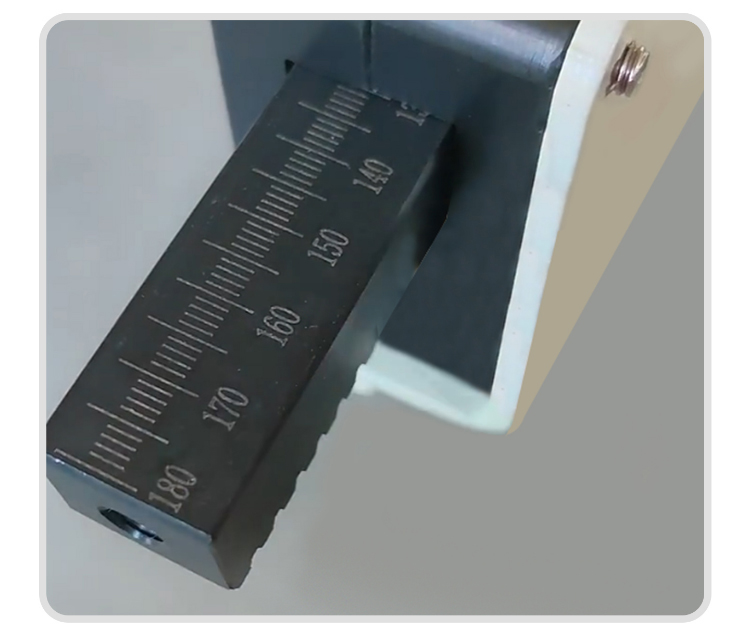
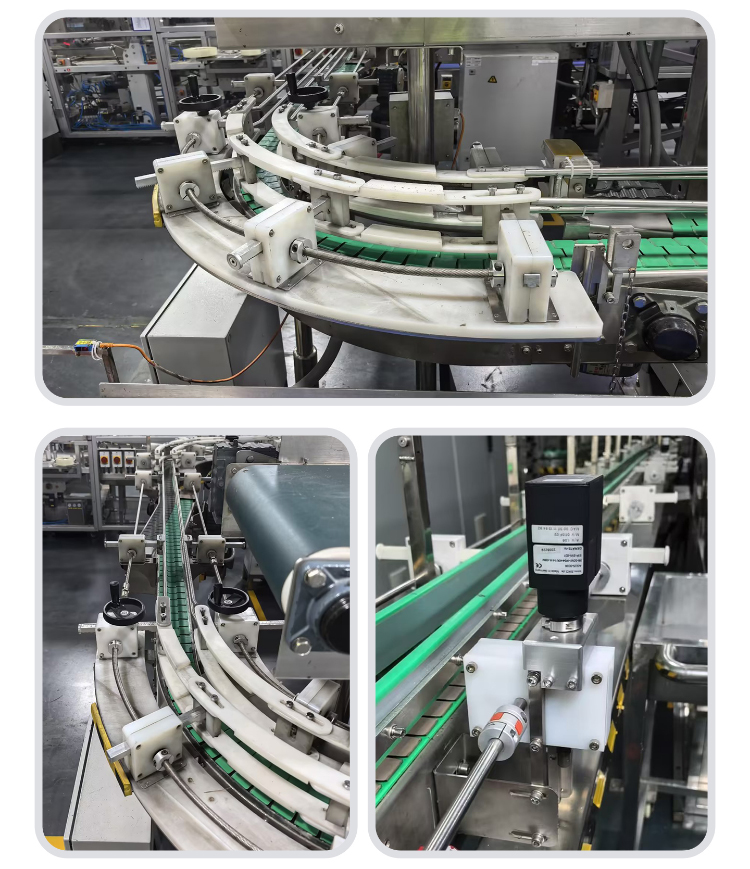
KECE guide rail width adjustment mechanisms use synchronized lead screws driven by a handwheel or crank to move both side guide rails inward or outward simultaneously, maintaining perfect parallel alignment without measuring tapes or tools. A built-in position scale delivers repeatable settings for high-mix packaging, beverage, and pharmaceutical lines, slashing changeover time from hours to under a minute. Constructed with stainless steel or hardened carbon steel screws and self-lubricating nuts, the mechanism withstands frequent adjustment cycles and conveyor vibration. Manual, position-indicator, and motorized PLC-integrated versions adapt to every automation level. Manufactured in an ISO 9001 certified facility with patented conveyor technology, KECE width adjusters help industrial clients run more SKUs on fewer lines with zero rework.
Availability:
Quantity:
facebook sharing button
twitter sharing button
line sharing button
wechat sharing button
linkedin sharing button
pinterest sharing button
whatsapp sharing button
sharethis sharing button

1. Fast & Tool-Free Changeover

The handwheel or crank mechanism allows operators to adjust guide rail width in seconds without wrenches, screwdrivers, or measuring tools. A built-in scale or digital position indicator shows the current width setting, enabling repeatable positioning for frequent product changes. This reduces downtime significantly compared to bolt-and-slot adjustment methods.


2. Precise Parallelism & Synchronized Movement

Dual lead screws connected by a synchronous belt, gear train, or independent drives ensure both guide rails move equally and remain parallel to the conveyor centerline. This prevents product skewing, edge jamming, or uneven pressure. Precision-machined linear guides and recirculating ball bearings provide smooth, backlash-free travel.


3. Heavy-Duty Construction for Continuous Use

The mechanism is built with stainless steel or hardened carbon steel lead screws, self-lubricating bronze or plastic nuts, and sealed bearings to withstand frequent adjustment cycles and conveyor vibration. Corrosion-resistant coatings or full stainless steel versions are available for food processing, pharmaceutical, or washdown environments. Locking handles secure the position once set.


Product Uses


1. Packaging Lines with Multiple Product Sizes

On carton erectors, case packers, and shrink wrappers, the width adjustment mechanism repositions side guides for different box widths (e.g., switching from 12-bottle to 24-bottle cases). Operators turn a handwheel to set the new width using a scale, then lock the position. Changeover takes under one minute without tools.


2. Beverage & Container Conveyor Changeover

For filling lines handling PET bottles, cans, and glass containers of varying diameters, the mechanism adjusts both side guides simultaneously. Synchronized movement maintains the product path centered over the conveyor belt or chain. Motorized versions with recipe memory allow one-button changeover between pre-set widths, ideal for high-mix production.


3. Automated Assembly & Pharmaceutical Lines

In electronics assembly or syringe filling lines, the mechanism provides precise width adjustment for different PCB panels, trays, or blister card sizes. Digital position indicators or servo-driven versions integrate with PLCs and HMI touchscreens, allowing width changes to be programmed into product recipes. This ensures repeatable positioning and supports Industry 4.0 data logging.
conveyor width adjustment


conveyor width adjustment


conveyor width adjustment


conveyor width adjustment


conveyor width adjustment


conveyor width adjustment


conveyor width adjustment


conveyor width adjustment


conveyor width adjustment


conveyor width adjustment


conveyor width adjustment

conveyor width adjustment


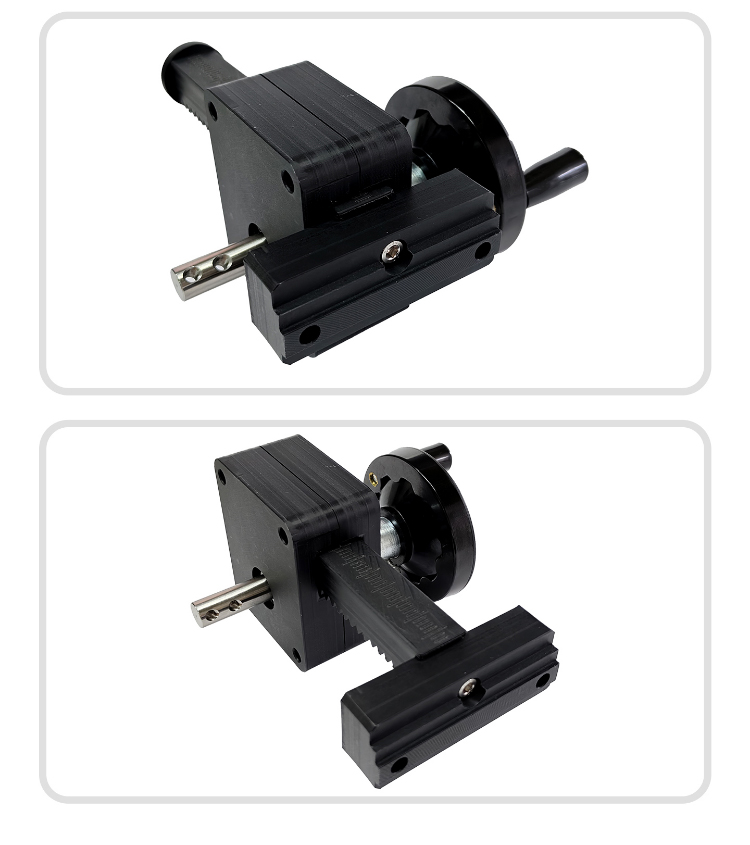
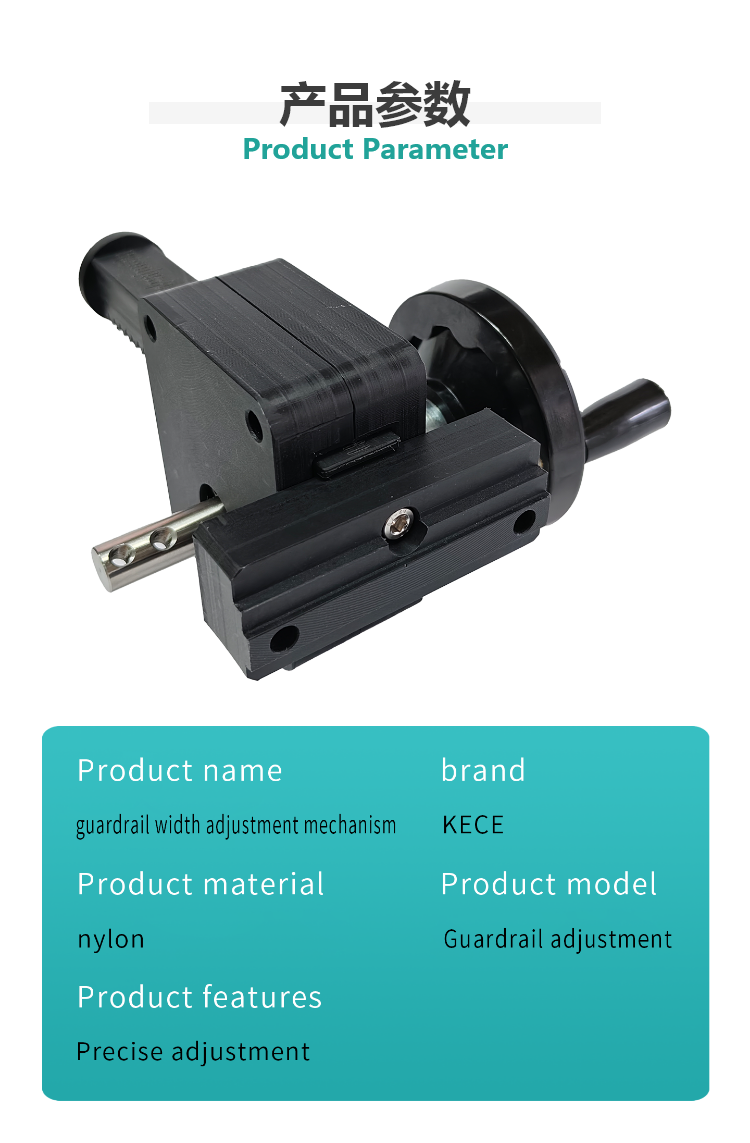
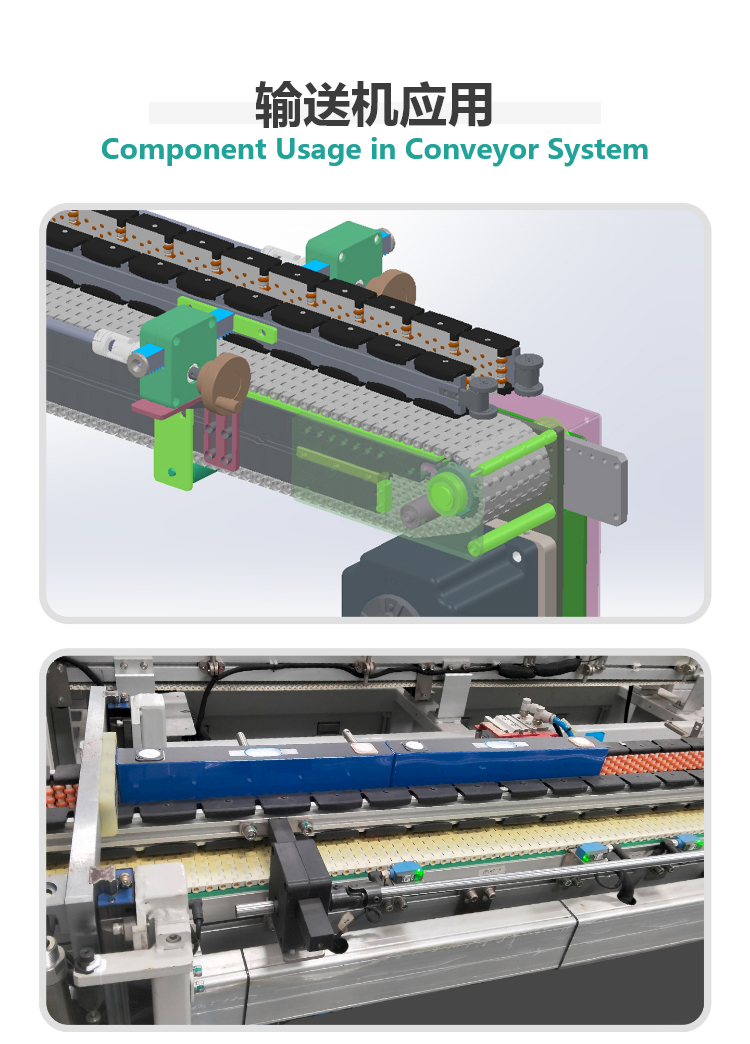
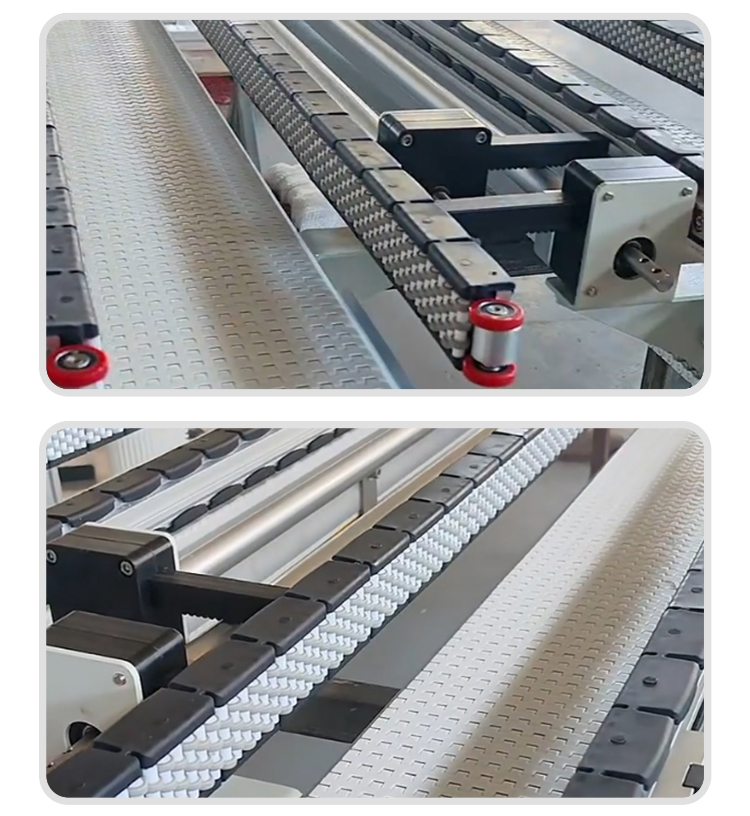
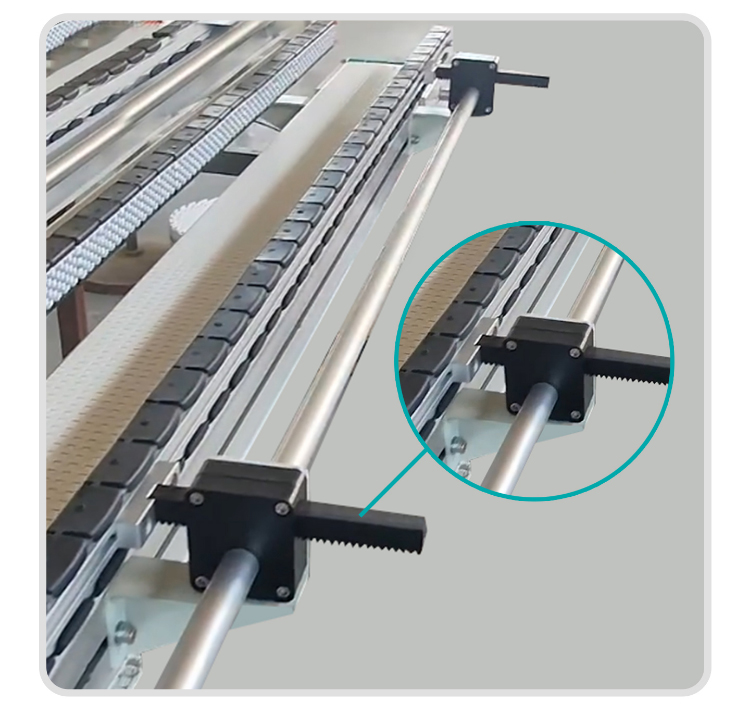
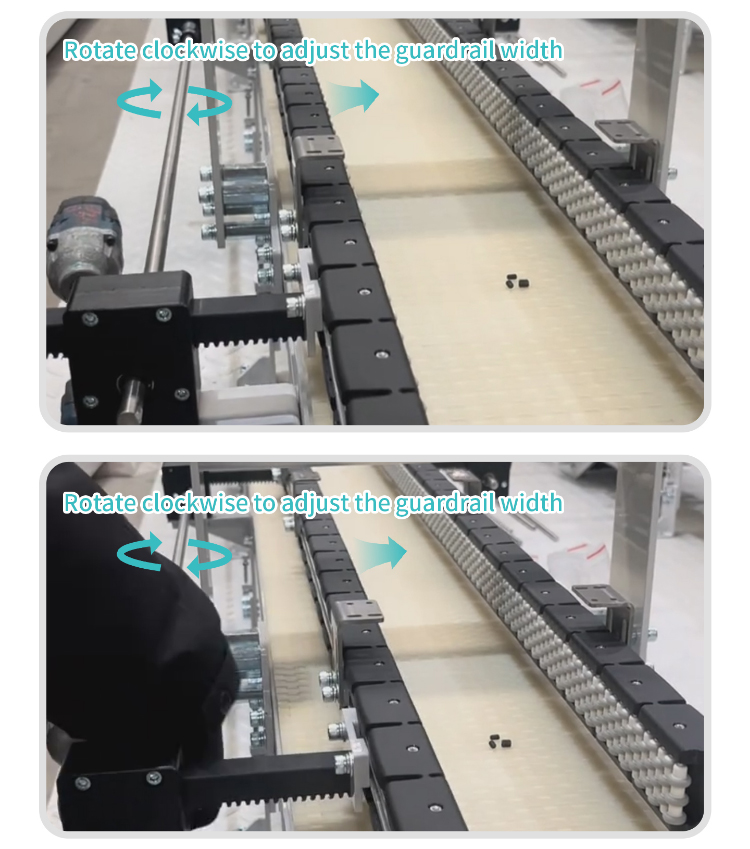
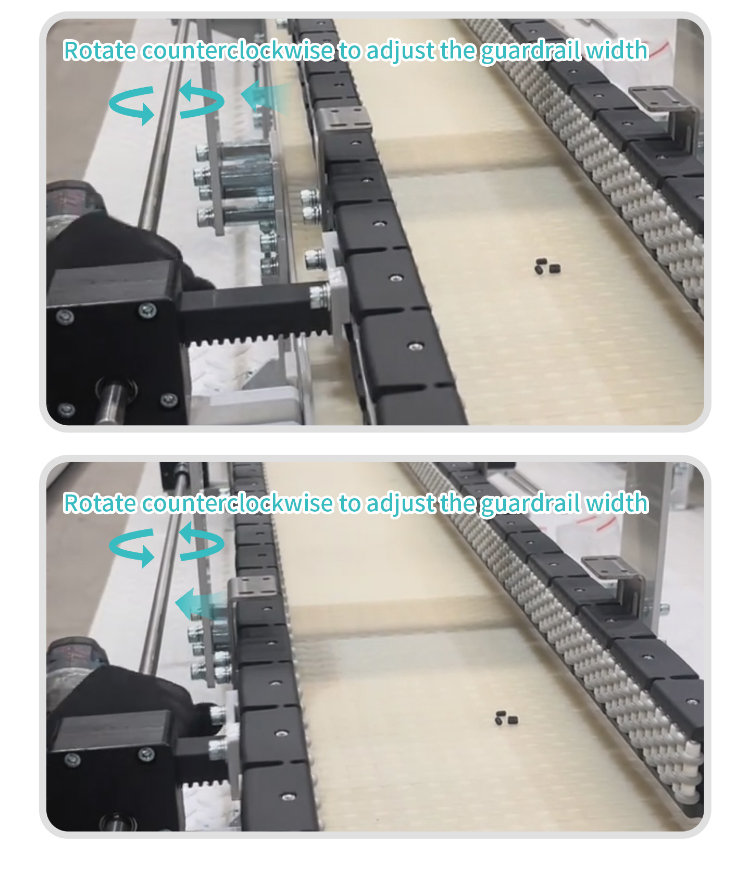
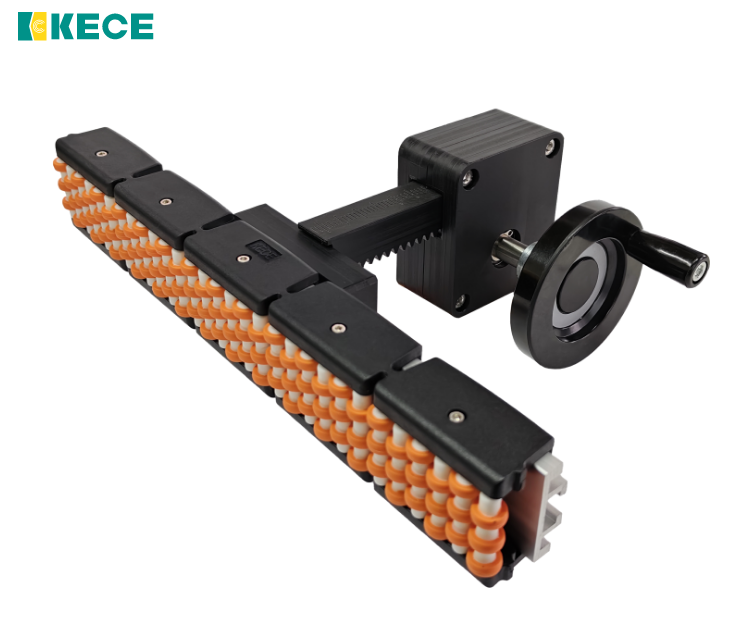
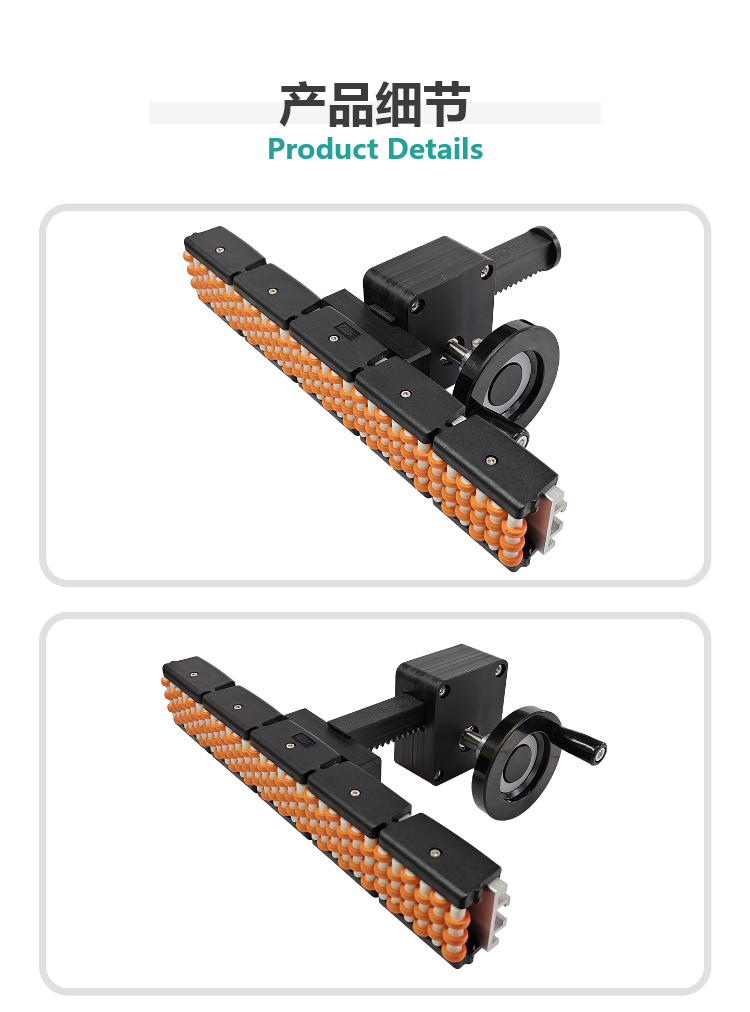
The Guide Rail Width Adjustment Mechanism is a mechanical assembly that repositions conveyor side guide rails to accommodate products of different widths. It uses a handwheel-driven rack-and-pinion system to move both left and right guide rails in a synchronized manner, maintaining parallel alignment relative to the conveyor centerline. Operators rotate the handwheel to increase or decrease the channel width, and the position remains fixed after adjustment through the self-locking characteristic of the drive. This mechanism is installed on packaging lines, filling lines, and assembly conveyors where multiple product sizes run on the same equipment. The adjustment process replaces manual bolt-and-slot repositioning with a single-point rotary control.

Width Adjustment Mechanism Design Principle

Drive and Transmission

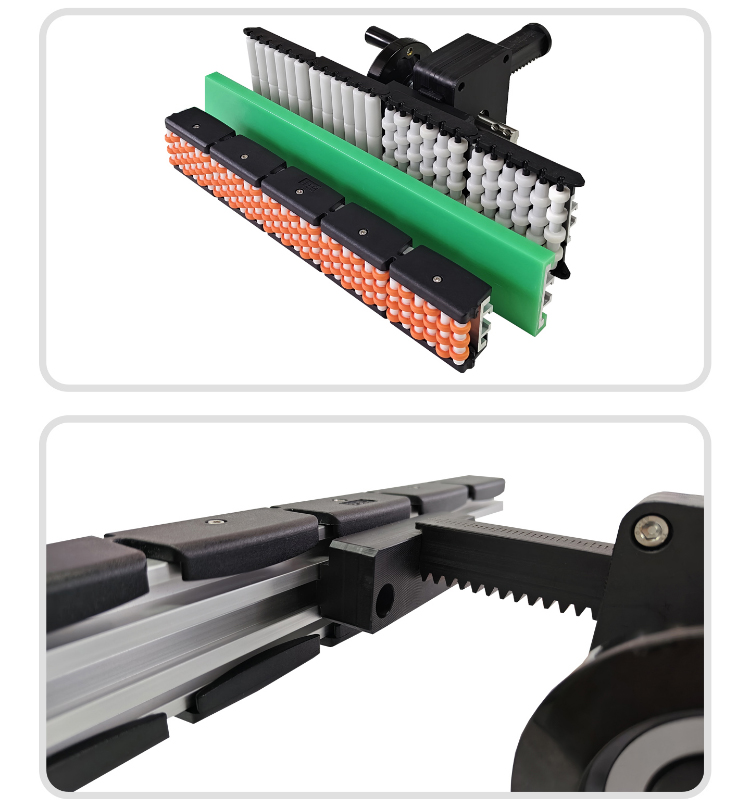
At the core of the mechanism is a toothed rack bar engaged by a pinion gear inside the handwheel housing. Rotating the handwheel turns the pinion, which drives the rack linearly along its axis. The rack connects directly to the guide rail mounting bracket, transferring motion to the rail assembly. Both sides of a dual-rail system can be linked for synchronized movement, or adjusted independently where asymmetric channel positioning is required.

Housing and Mounting

The mechanism housing is molded from glass-filled engineering polymer in black, enclosing the pinion and bearing assembly. It mounts to the conveyor side frame through standard bolt patterns compatible with common aluminum profile systems. The rack bar extends through the housing and is supported along its length by the conveyor frame structure to maintain straight travel.

Conveyor Guide Rail Adjustment Technical Parameters

Technical Specifications

Parameter

Specification

Drive type

Manual handwheel with rack-and-pinion

Adjustment mode

Bilateral synchronized or independent

Rack material

Carbon steel with black oxide finish

Housing material

Glass-filled nylon, black

Handwheel material

Reinforced engineering plastic

Mounting interface

Standard aluminum conveyor profile compatible

Locking method

Handwheel friction hold

Typical adjustment range

0 – 300 mm (subject to conveyor width)

Positioning Characteristics

The rack-and-pinion drive provides consistent linear displacement per revolution of the handwheel. This relationship allows operators to repeat width settings by counting turns when product recipes are documented, supporting consistent setup across production shifts.

Width Adjustment Mechanism Material and Construction

Structural Components

The rack bar is manufactured from carbon steel with a black oxide surface treatment to provide corrosion resistance for indoor factory environments. The pinion gear and internal bearings are sized for the expected adjustment frequency and conveyor vibration loads of standard packaging and bottling lines.

Environmental Suitability

The polymer housing resists common industrial oils, dust, and moderate humidity levels. For production areas with regular water washdown, additional protective measures or stainless steel variant options can be discussed during specification review. The mechanism is intended for indoor installation on fixed conveyor lines.

FAQ About Guide Rail Width Adjustment

Can the mechanism be upgraded from manual to motorized operation?

Manual handwheel units are designed as standalone mechanical assemblies. Motorized width adjustment systems with drive motors and position feedback represent a separate product configuration. The suitability of retrofitting depends on the specific conveyor structure and control system.

Is the adjustment self-locking, or does it require a separate lock?

The rack-and-pinion configuration with handwheel friction holds position under normal conveyor operating loads. For applications with heavy side loading or frequent impact, additional locking elements can be specified at the design stage.

What is the maximum adjustable travel per mechanism?

The travel distance is determined by the length of the rack bar installed on the conveyor. Typical installations provide adjustment ranges up to 300 mm, and rack length can be specified to match the required width range for the application.

Can both rails move together, or only one side?

The mechanism can be configured for bilateral synchronized adjustment where both rails move equally toward or away from center, or for single-side adjustment where only one rail repositions. The configuration is selected based on how the conveyor system is designed.

Previous: 
Next: 

We are committed to providing customers with quality transpor-tation products and services, so that transportation more simple.

Quick Links

Product Category

Contact Us

 +86-15000021542 / +86-13482221346 /        +86-13564834465
 Shuangying Road 788, Nangiao District, Chuzhou City, Anhui Province, China.
Copyright © 2026 Anhui Kecheng Intelligent Equipment Co., Ltd. All Rights Reserved. Sitemap | Privacy Policy