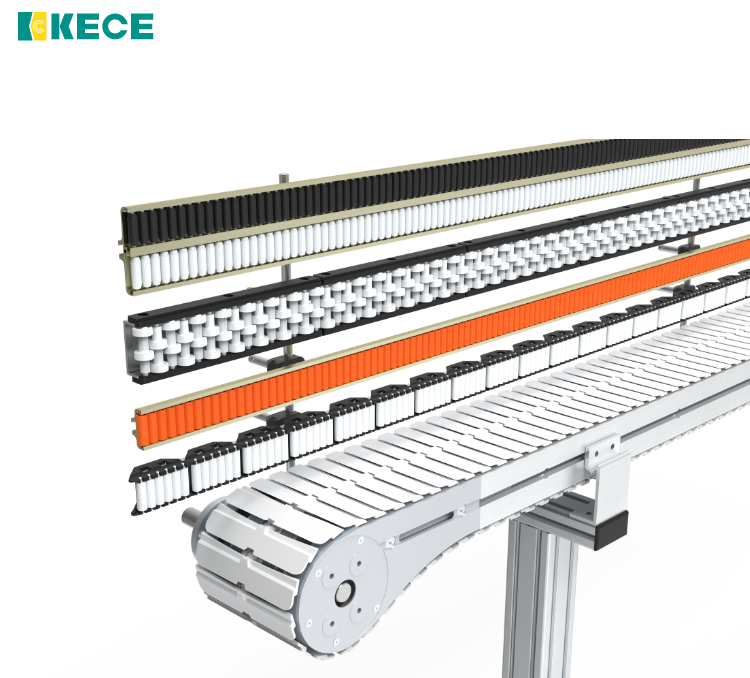
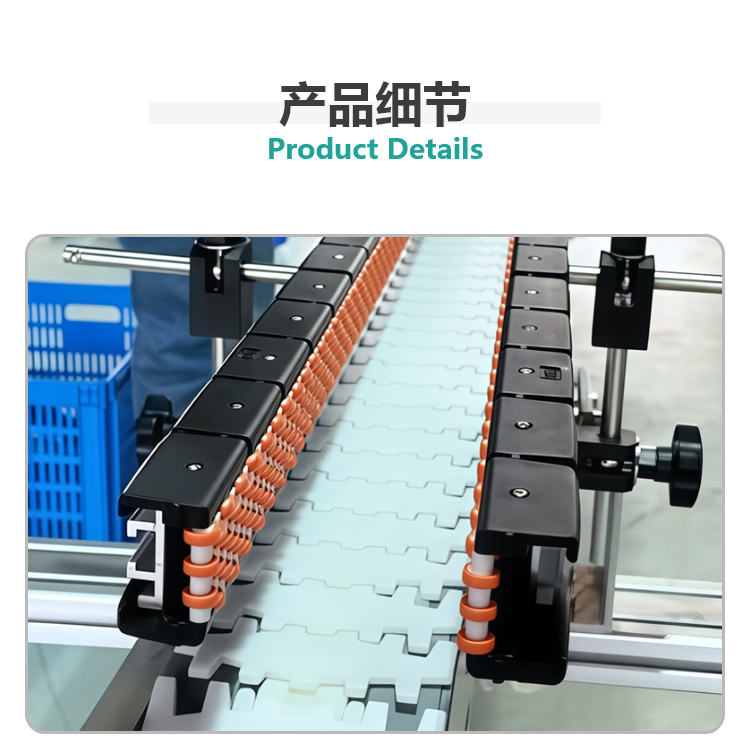
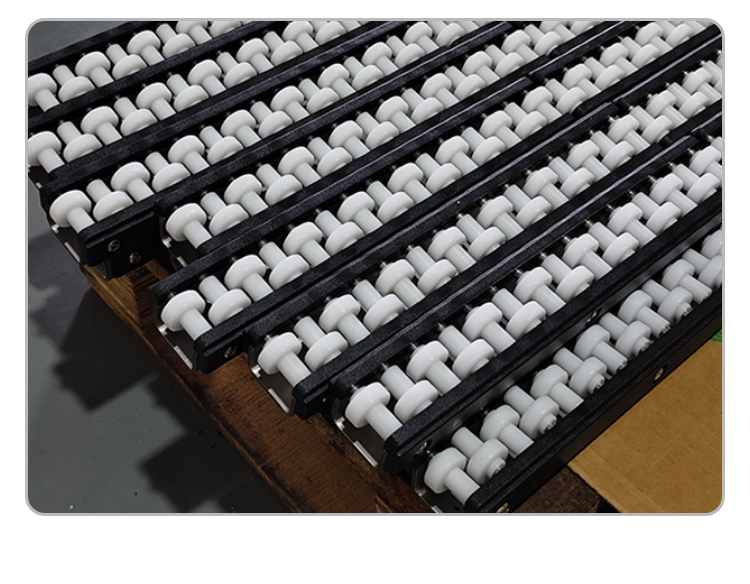
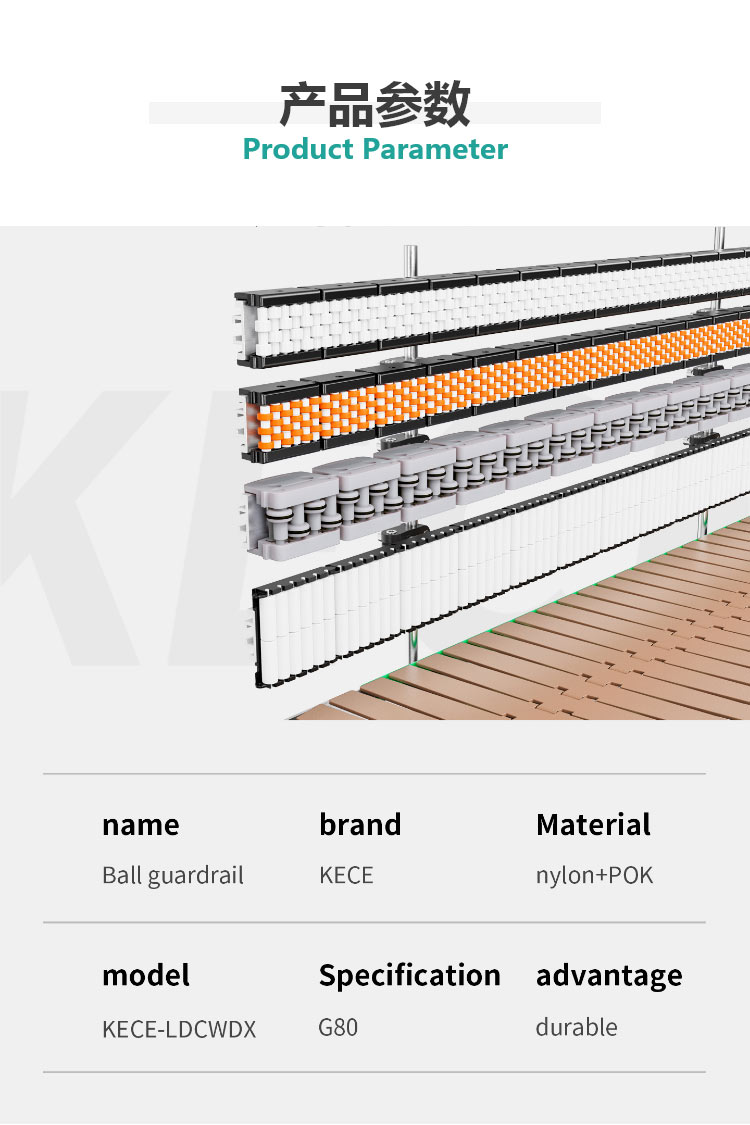
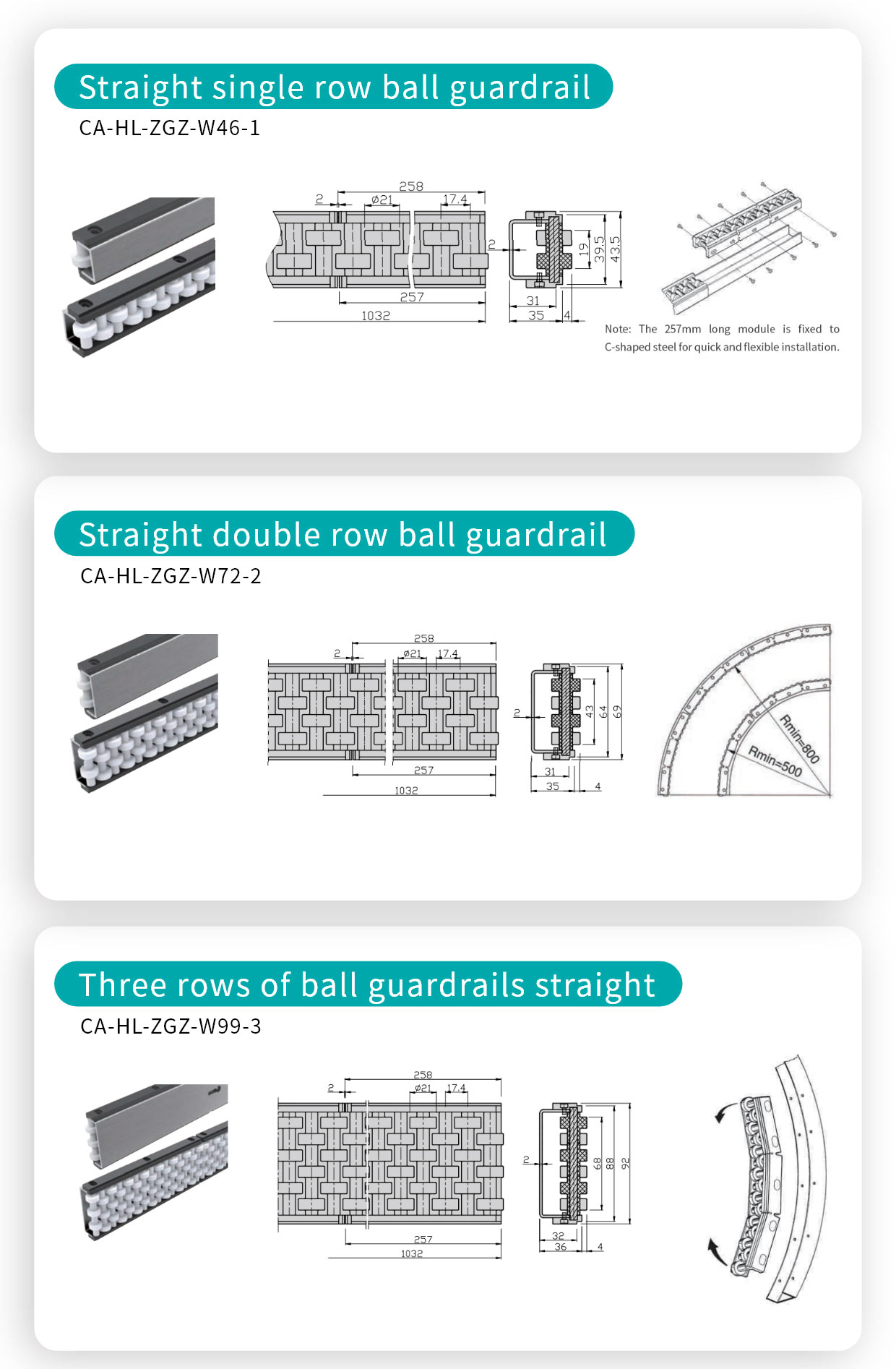
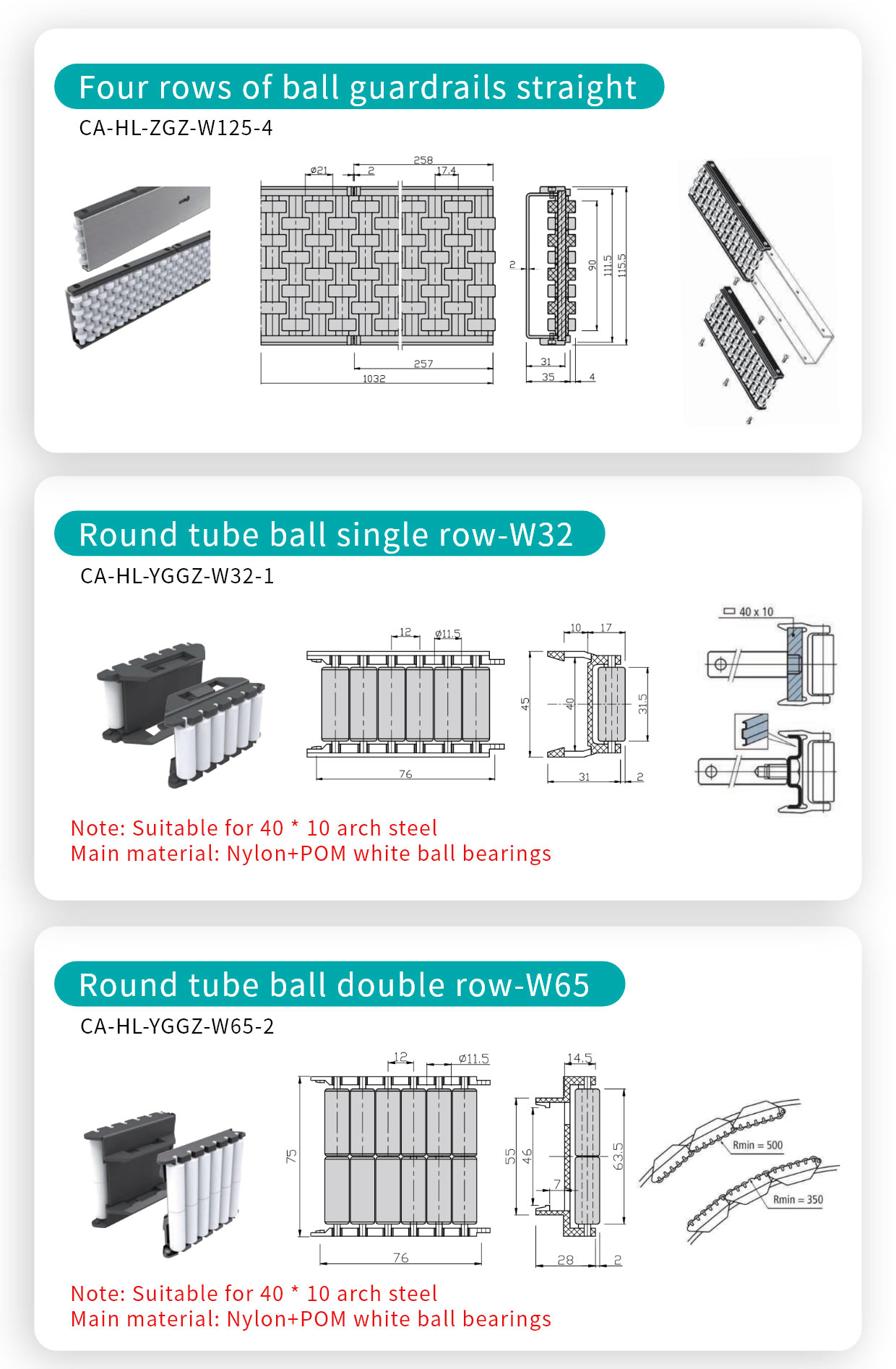
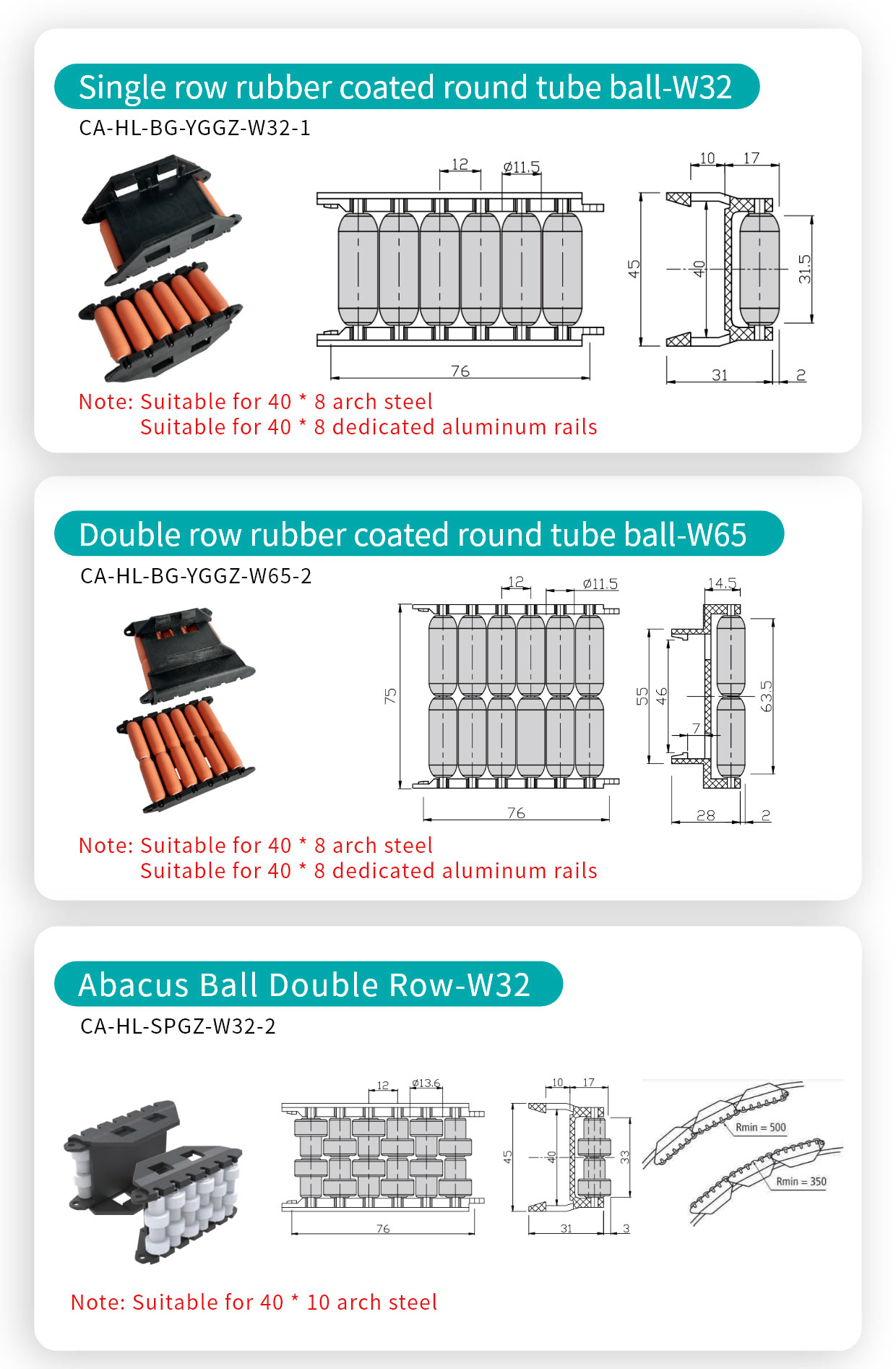
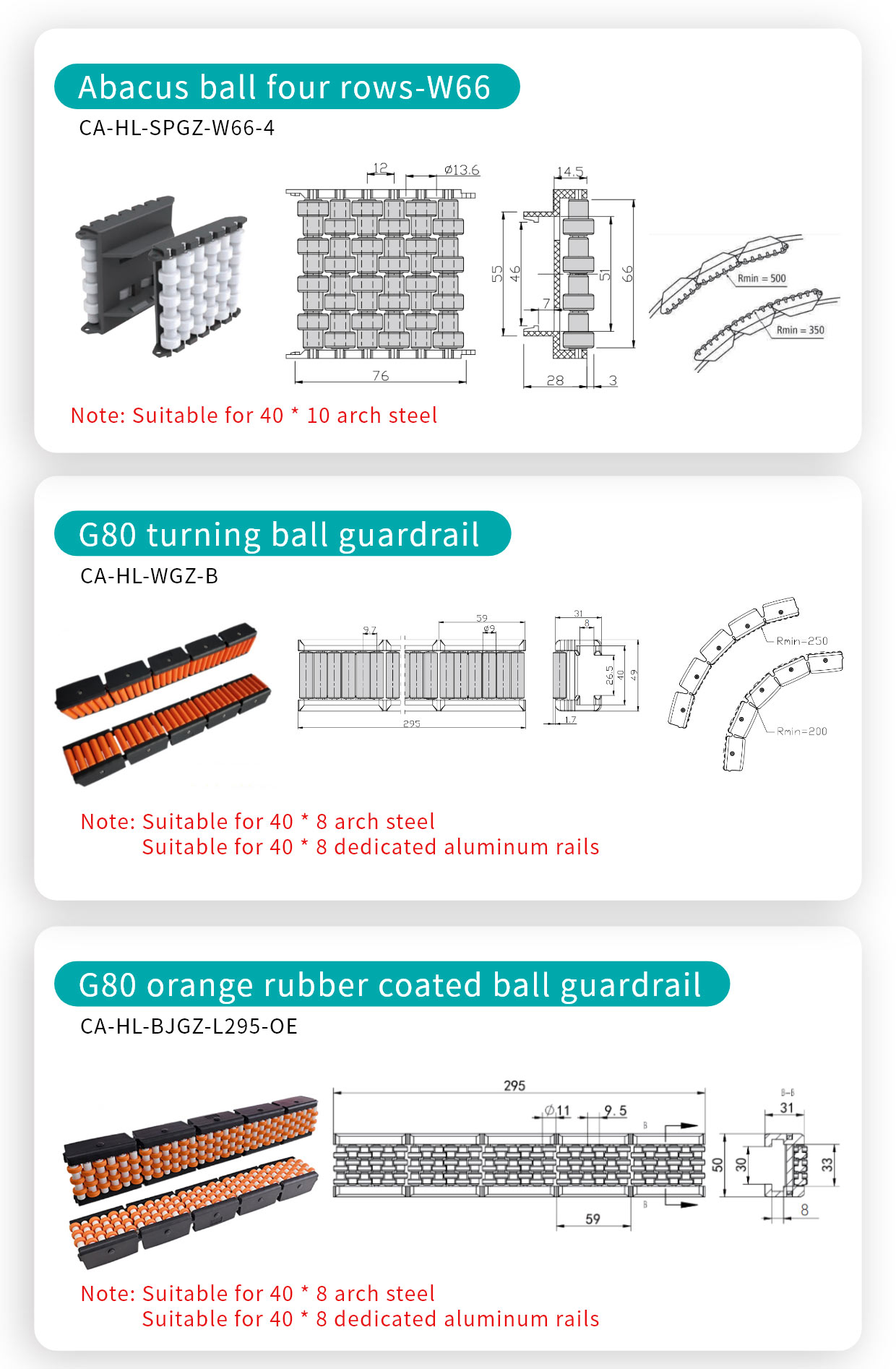
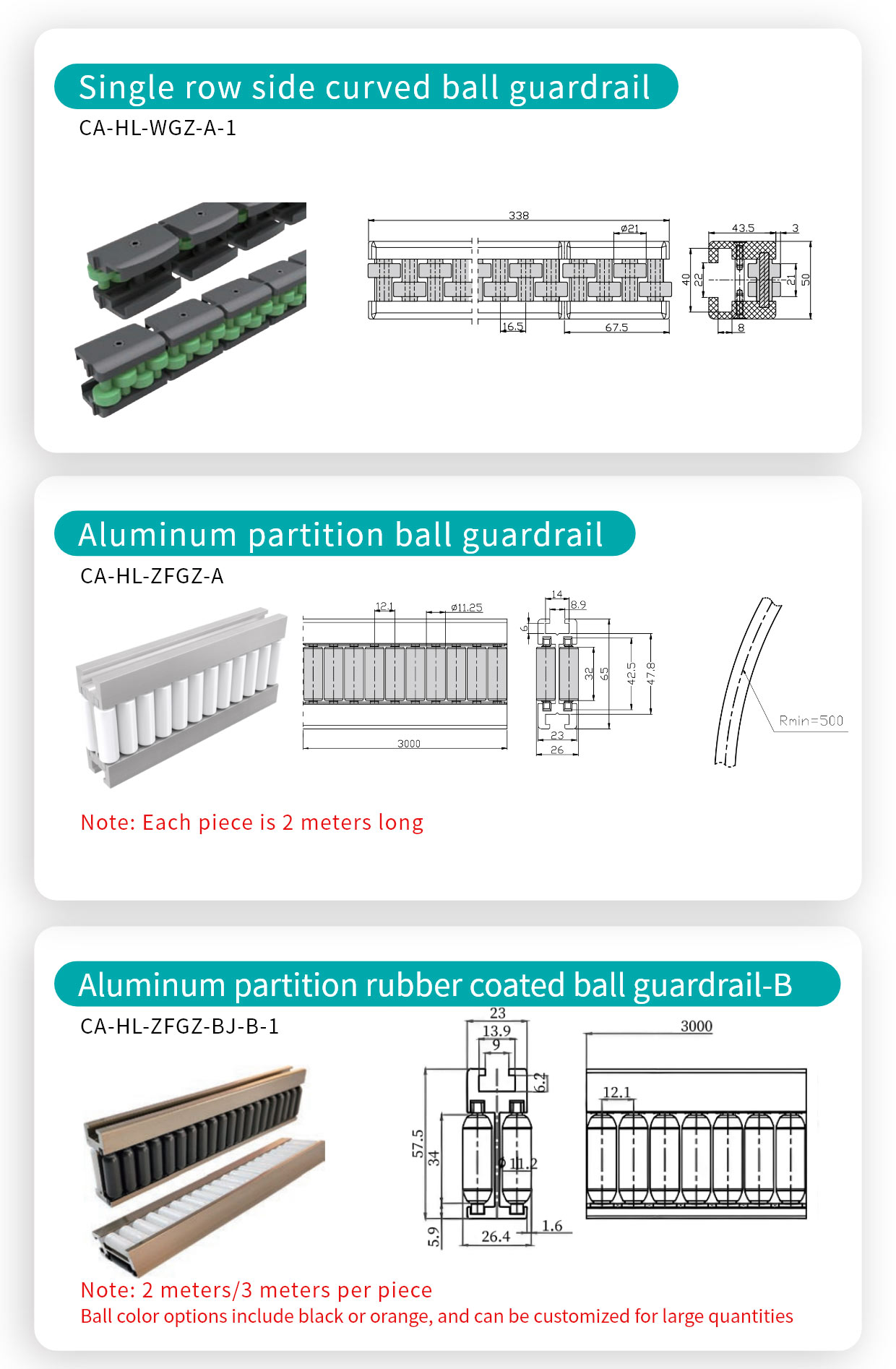
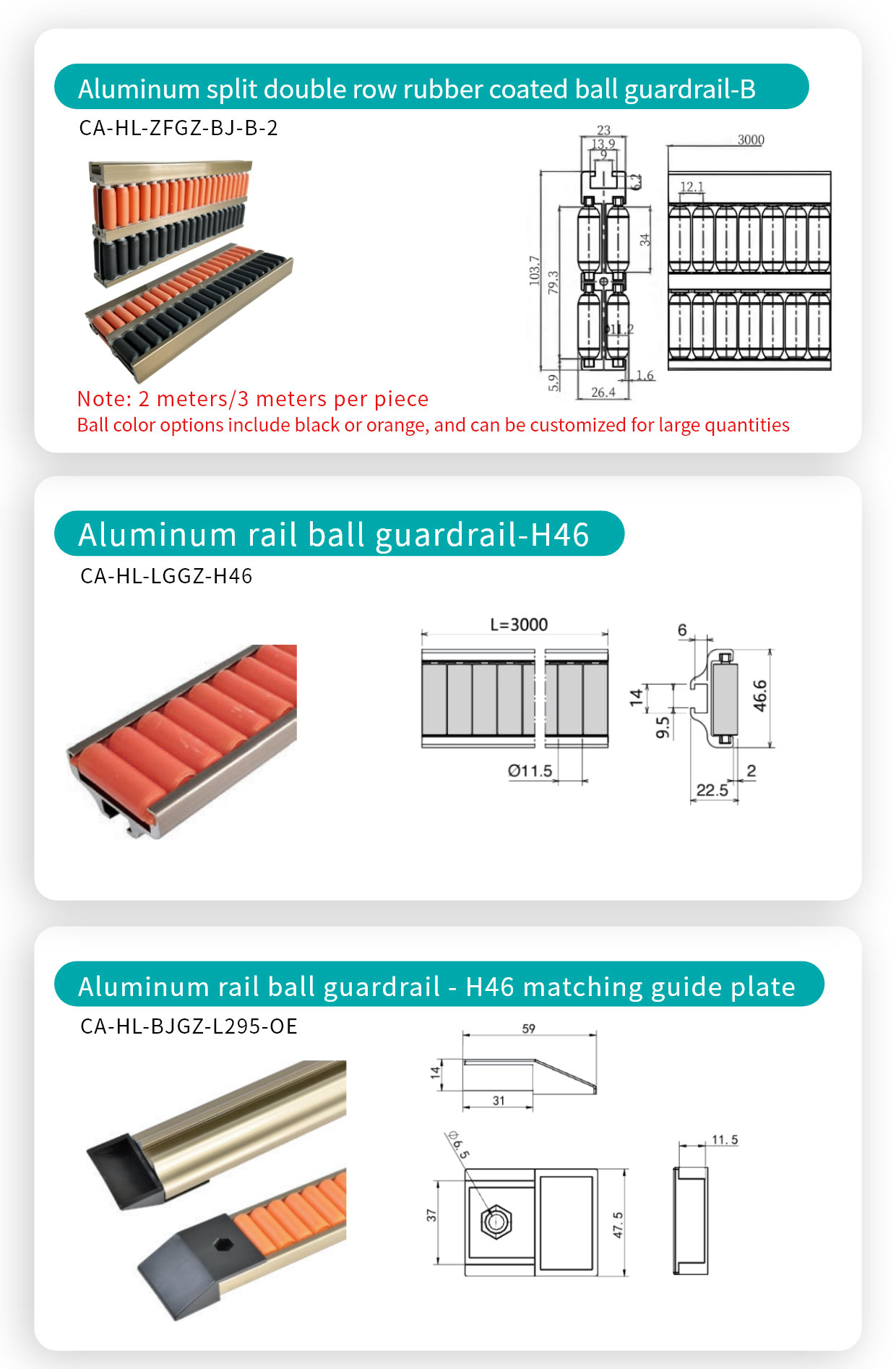
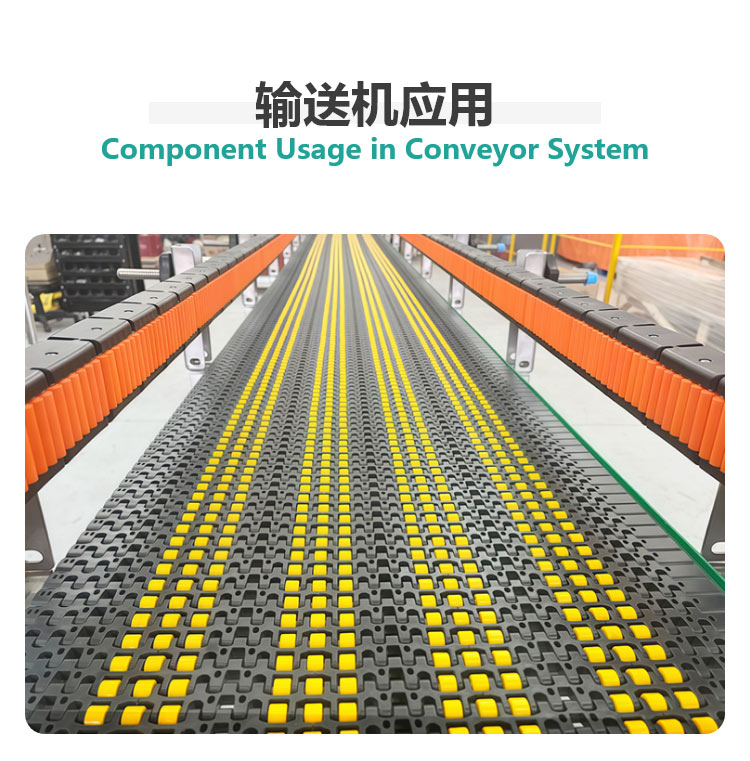
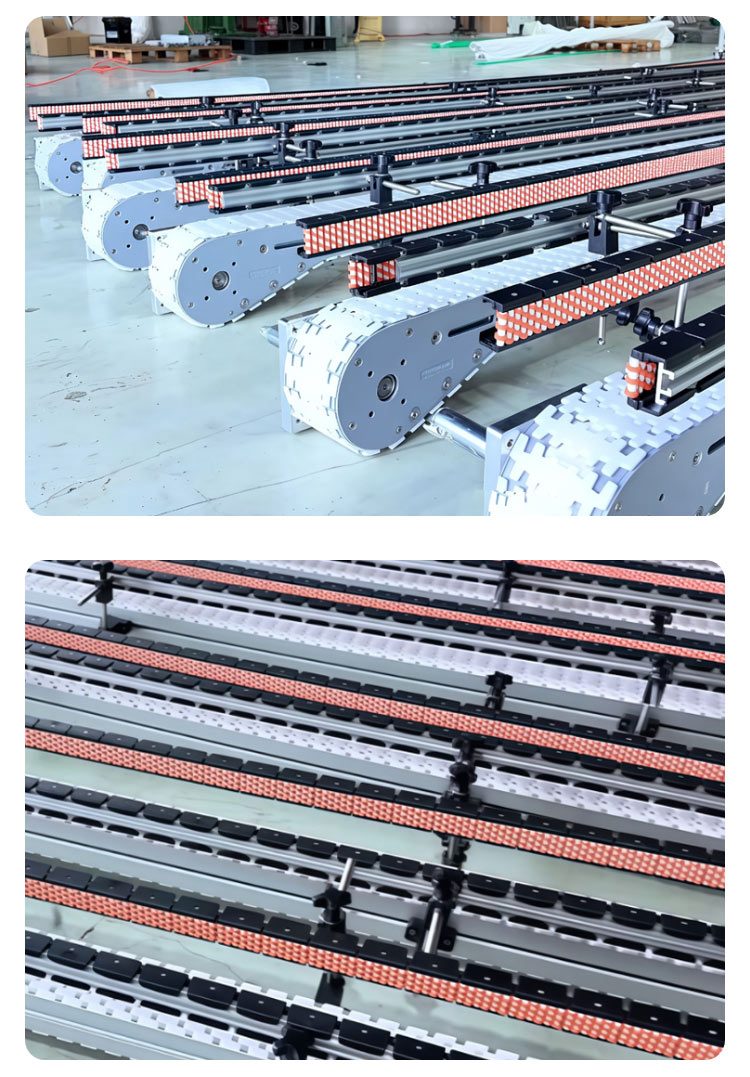
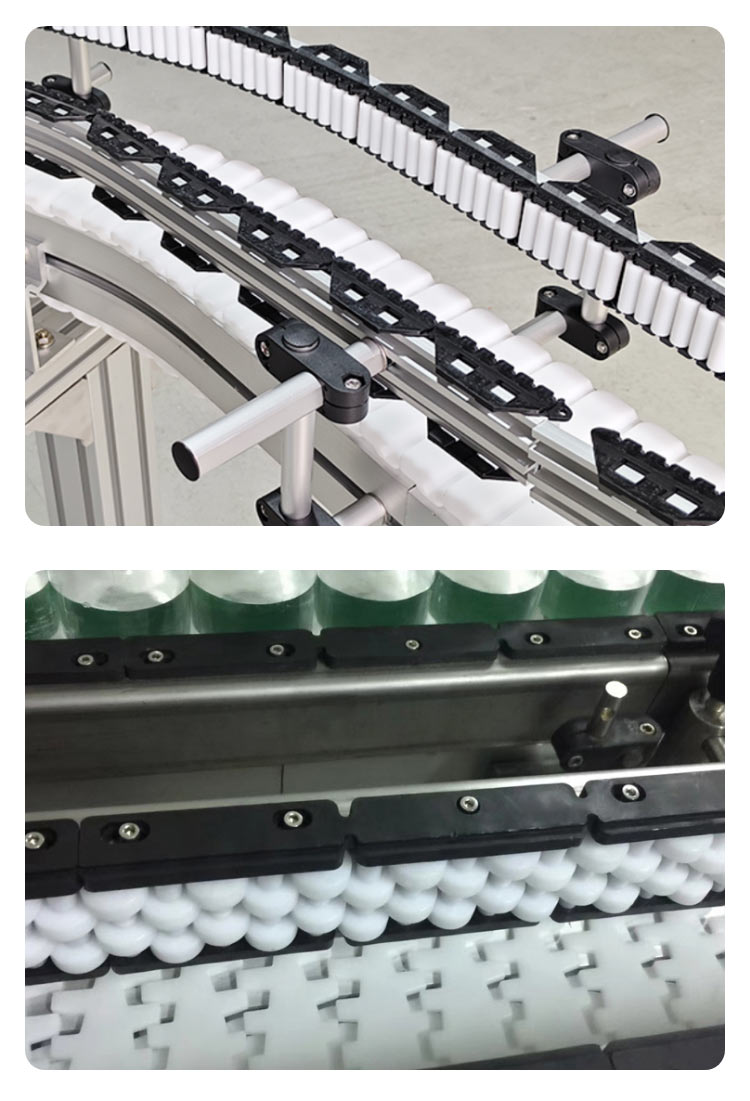
The Ball Transfer Guide Rail is a side guidance component installed along conveyor lines to maintain product alignment and reduce contact friction during transportation. It uses a series of freely rotating balls mounted along the rail body to replace sliding contact with rolling contact. This design minimizes surface abrasion on conveyed items and supports smoother product transfer around curves and merge points. The rail body accepts multiple ball cartridge configurations, including single-row, double-row, and four-row layouts, to match different load and contact area requirements. Standard lengths and modular sections allow on-site cutting and assembly to fit specific conveyor layouts.
Ball Transfer Guide Rail Construction and Materials
Rail Body Options
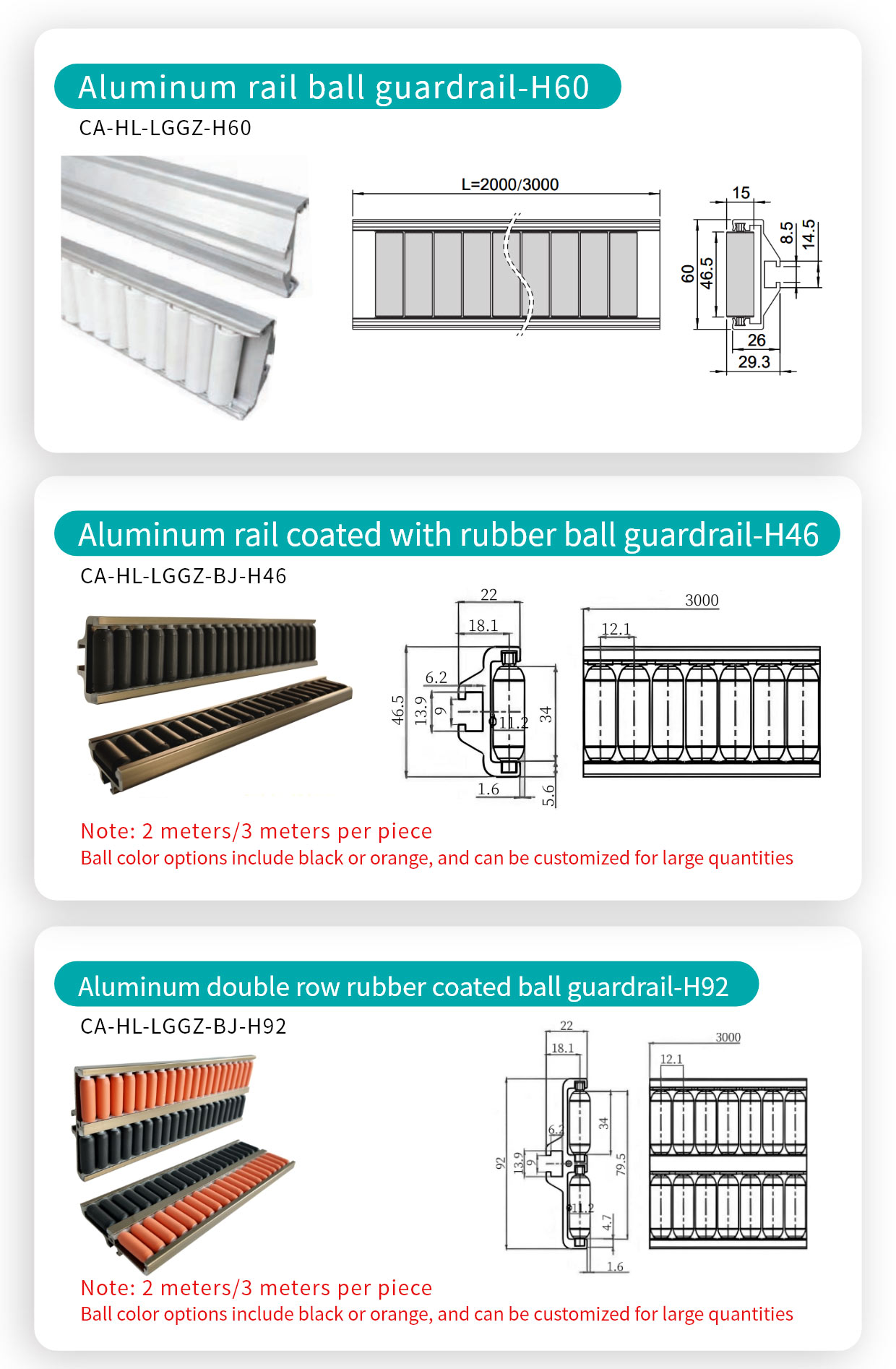
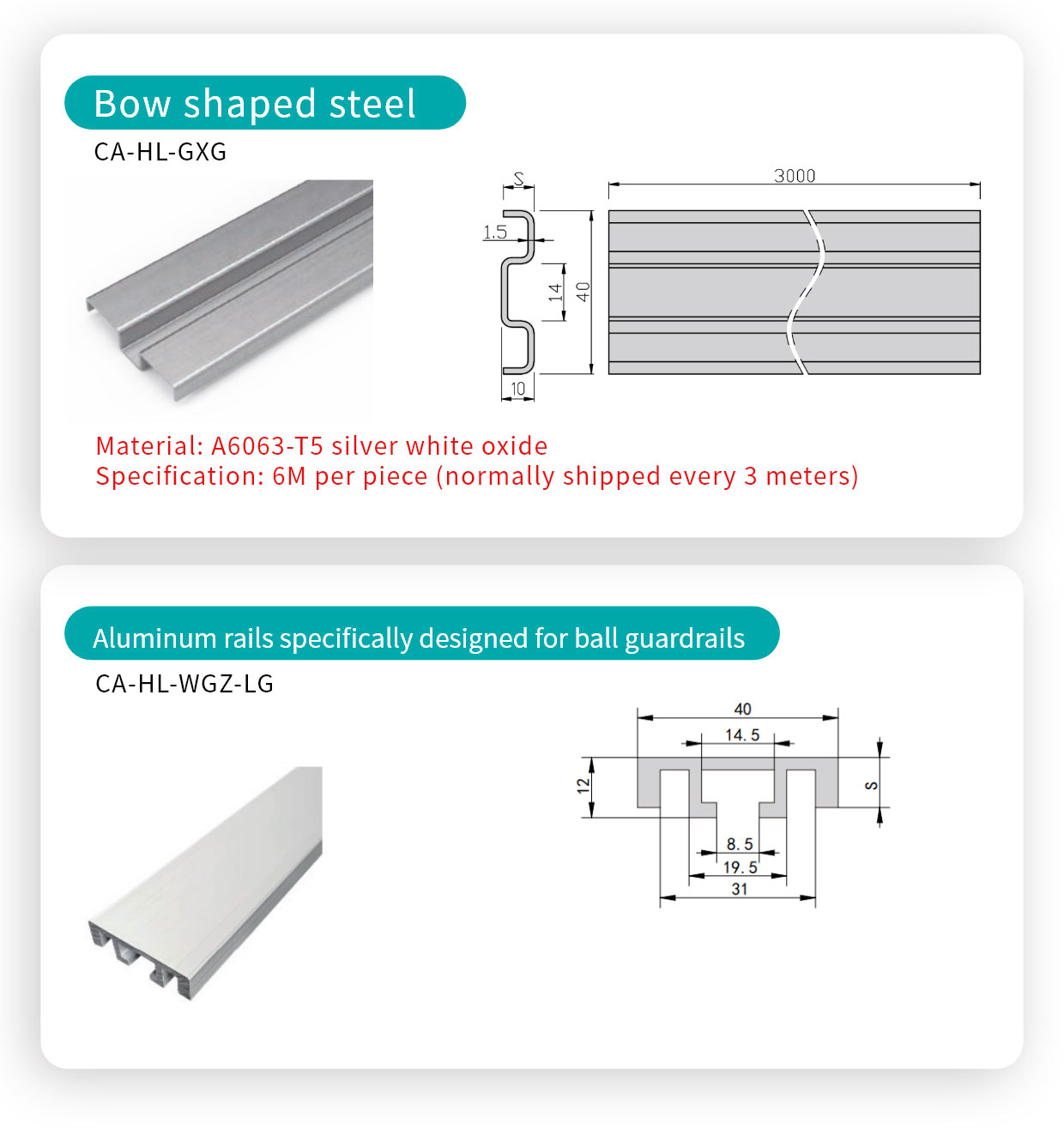
The rail substrate is available in two primary material formats. Extruded aluminum profiles offer a lightweight structure with natural corrosion resistance, suitable for most indoor conveyor installations. Stainless steel variants provide higher corrosion resistance for washdown environments in food and beverage production. For aluminum partition models, each standard section measures 3000 mm in length and can be cut to shorter segments during installation.
Ball Cartridge Components
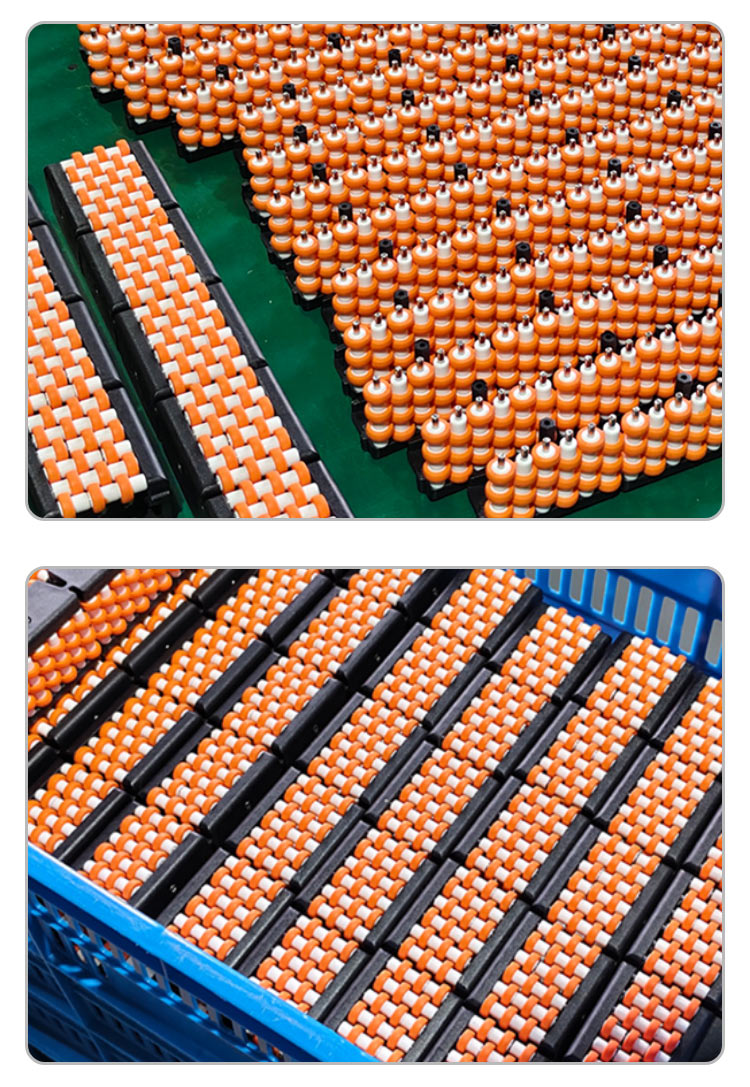
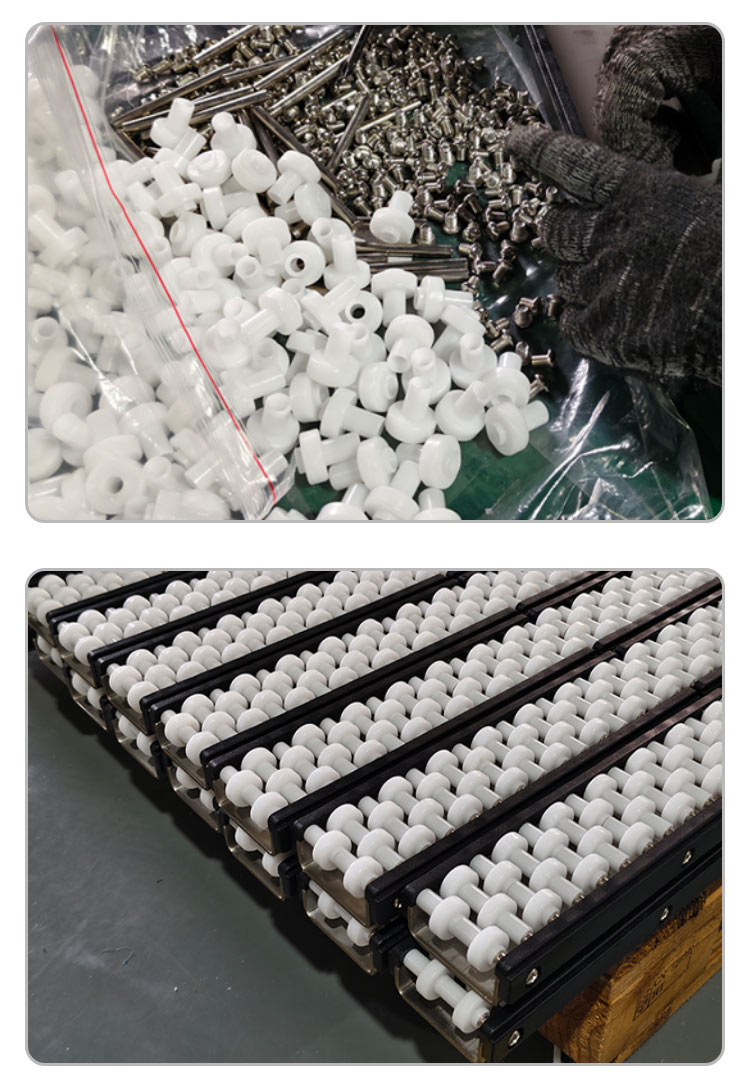
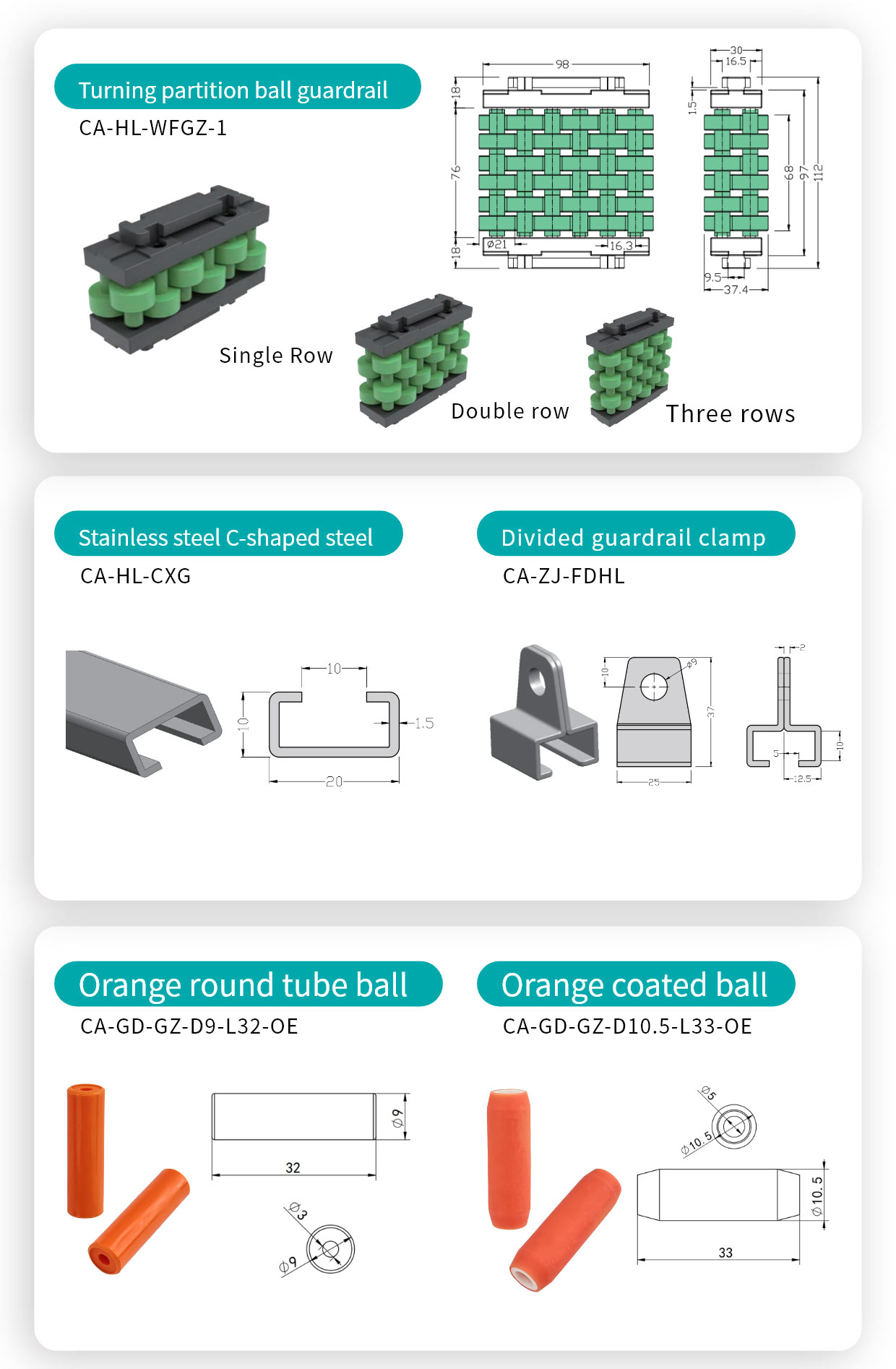
Each ball unit consists of a rotating ball, a retaining socket, and a mounting base. Balls are manufactured from POM (acetal) in standard white or orange formulations, with rubber-coated options available for noise reduction and gentler product contact. The ball cartridges snap or screw into pre-positioned slots along the rail body, allowing individual replacement without full rail disassembly. Ball diameters range from φ9 mm to φ13.6 mm across different models, with pitch spacing from 9.5 mm to 12 mm.
Dimensional Specifications by Model
Model Number | Product Name | Length (mm) | Width (mm) | Height (mm) | Ball Diameter (mm) | Ball Pitch (mm) | Min. Bend Radius (mm) |
CA-HL-SPGZ-W66-4 | Abacus Ball Four Rows-W66 | — | 76 | 56.6 | φ13.6 | 12 | 350 |
CA-HL-WGZ-B | G80 Turning Ball Guardrail | 295 | 55 | 30 | φ11 | 9.5 | 250 / 200 |
CA-HL-BJGZ-L295-OE | G80 Orange Rubber Coated Ball Guardrail | 295 | 59 | 30 | φ11 | 9.5 | — |
CA-HL-WGZ-A-1 | Single Row Side Curved Ball Guardrail | 338 | 67.5 | 30 | φ12.5 | — | — |
CA-HL-ZFGZ-A | Aluminum Partition Ball Guardrail | 3000 | 121 | 47.9 | φ11.25 | — | 500 |
CA-HL-ZFGZ-BJ-B-1 | Aluminum Partition Rubber Coated Ball Guardrail-B | 3000 | 26.4 | 57.5 | φ11.2 | — | — |
CA-HL-WFGZ-1 | Turning Partition Ball Guardrail | 98 | 76 | 42 | φ13 | — | — |
Compatible Mounting Rails
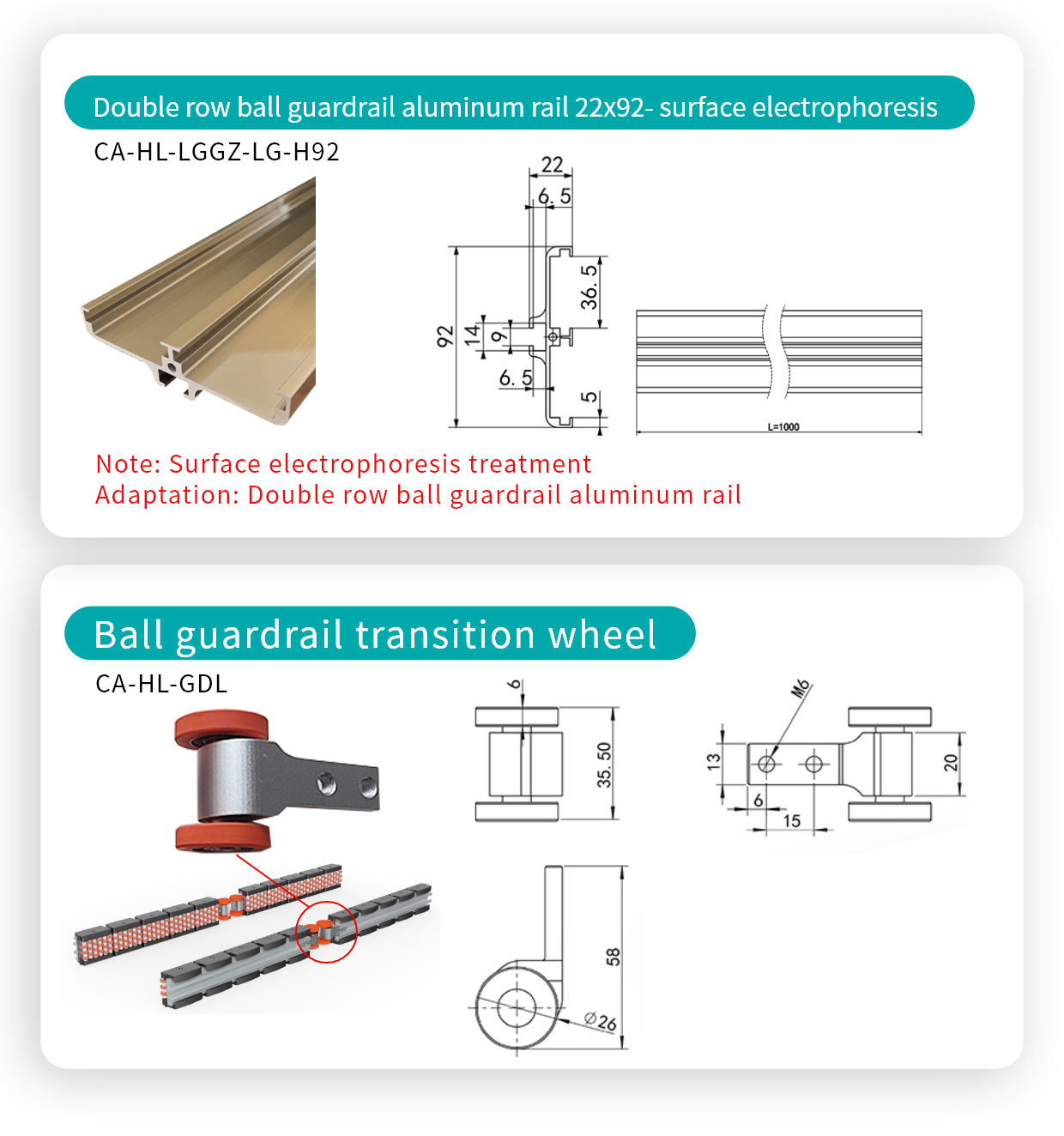
G80 series ball guardrails fit 40×8 arch steel profiles and 40×8 dedicated aluminum rails. The W66 abacus series mounts on 40×10 arch steel profiles. Stainless steel C-shaped mounting channels (20×10×1.5 mm cross-section) are available as an alternative mounting interface for custom frame installations.
Ball Transfer Guide Rail Industrial Applications
Beverage and Packaging Conveyor Lines
On filling, rinsing, and labeling lines, ball transfer guide rails maintain lateral alignment of PET bottles, glass containers, and cans. The rolling contact reduces label abrasion and surface scuffing compared with fixed plastic rails. In accumulation zones, lower back pressure helps prevent container tipping during dense product flow.
Merge and Divert Transfer Points
At conveyor merge points and single-file diverters, ball guide rails provide lateral containment with reduced friction, allowing products to self-align without skewing or jamming. This configuration appears in parcel sorting systems, pharmaceutical bottle lines, and baggage handling conveyors where product orientation must be preserved through transitions.
Electronics and Finished Goods Handling
For painted panels, packaged consumer electronics, and polished metal components, ball guide rails with POM or rubber-coated balls reduce the risk of surface scratches and friction marks. The modular mounting design supports repositioning when product dimensions change during production reconfiguration.
FAQ About Ball Transfer Guide Rails
Can ball transfer guide rails be used on curved conveyor sections?
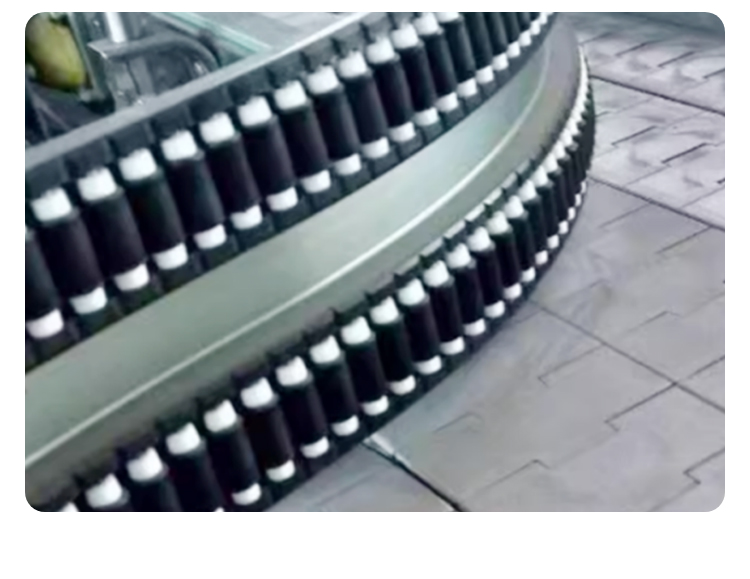
Yes. Curved ball guardrail models are engineered for installation on curved conveyor segments. Each model specifies a minimum bending radius, such as 200 mm, 250 mm, 350 mm, or 500 mm, depending on the ball pitch and rail construction.
Are replacement ball units available separately?
Yes, individual ball cartridges are available as spare parts. They can be replaced without removing the full rail assembly, which reduces maintenance downtime.
What ball material options are available for food production environments?
Standard POM balls are used in most food conveyor applications. Orange rubber-coated variants are also available for lines requiring lower noise or softer product contact. Material specifications can be confirmed for specific compliance requirements at the time of inquiry.
Can rail sections be cut to custom lengths on site?
Aluminum partition ball guardrails are supplied in 3000 mm standard sections and can be cut to shorter lengths during installation. Modular G80 and turning sections are supplied at fixed lengths and are arranged in series to match the required conveyor run.