| Availability: | |
|---|---|
| Quantity: | |
1. Modular & Reconfigurable Design
The T‑slotted profile allows tool‑free attachment of all conveyor components, including chain return rails, side guides, wear strips, and sensor brackets. Sections can be cut to length on‑site and joined using splice plates or dowel pins. This modularity supports rapid line changeovers, easy expansion, and reuse of beams in different layouts – reducing downtime and capital expenditure.
2. High Strength‑to‑Weight Ratio
The extruded aluminum main beam offers excellent rigidity while weighing approximately one‑third of steel equivalents. This reduces overhead support requirements and makes manual handling safer during installation. Despite its light weight, it withstands dynamic chain loads, tension forces, and product weights typical of flexible conveyor systems without deflection or vibration.
3. Corrosion & Chemical Resistance
The anodized aluminum surface resists moisture, mild acids, alkalis, and cleaning agents commonly used in food and battery production. For aggressive environments, stainless steel versions provide full corrosion protection. The beam does not flake or rust, preventing product contamination. Smooth surfaces and rounded edges promote easy cleaning and comply with hygiene standards (EHEDG, FDA compatible).
Product Uses
1. Flexible Chain Conveyor Frames
The main beam serves as the backbone of straight, curved, and inclined flexible chain conveyors in assembly lines. It supports chain tracks and returns, guiding the chain smoothly around 45°, 90°, or 180° bends. Its precisely machined channel ensures consistent chain engagement and low wear. Typical applications include electronics assembly, battery module lines, and small parts handling.
2. Food & Beverage Hygienic Conveyors
Stainless steel or anodized aluminum main beams are installed in meat, dairy, and bakery lines where frequent washdowns are required. The beam’s open profile avoids hidden crevices, and optional stainless steel fasteners prevent corrosion. It supports quick‑release side guides and belts, enabling sanitation teams to access all surfaces rapidly.
3. Automated Warehouse & Sorting Systems
In logistics and distribution centers, the main beam is used for modular conveyor sections that can be reconfigured as warehouse layouts change. The T‑slot allows easy mounting of diverters, chutes, sensors, and barcode scanners. The beam’s rigidity maintains alignment for high‑speed sliding shoe or narrow belt sorters, ensuring reliable package tracking and reduced jams.
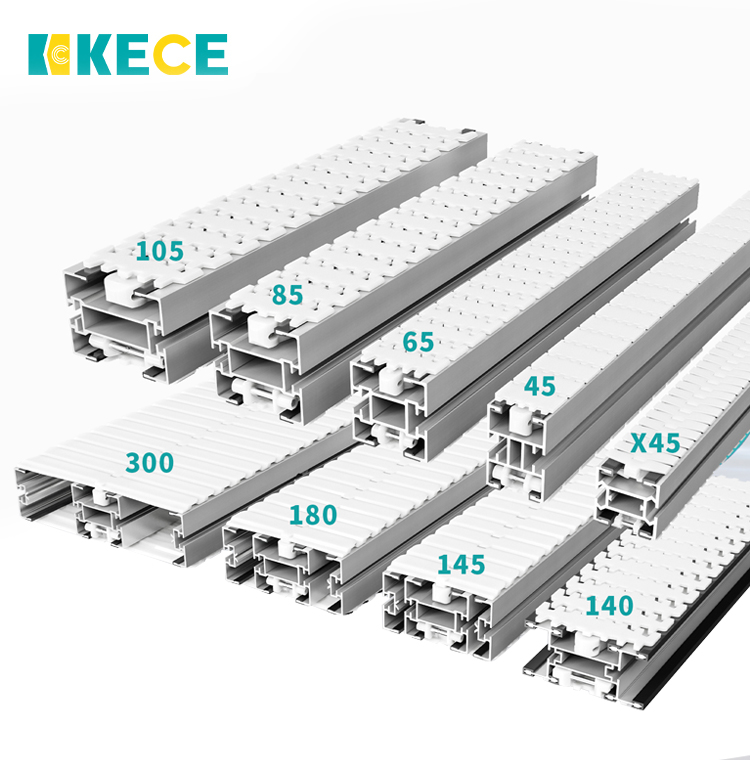
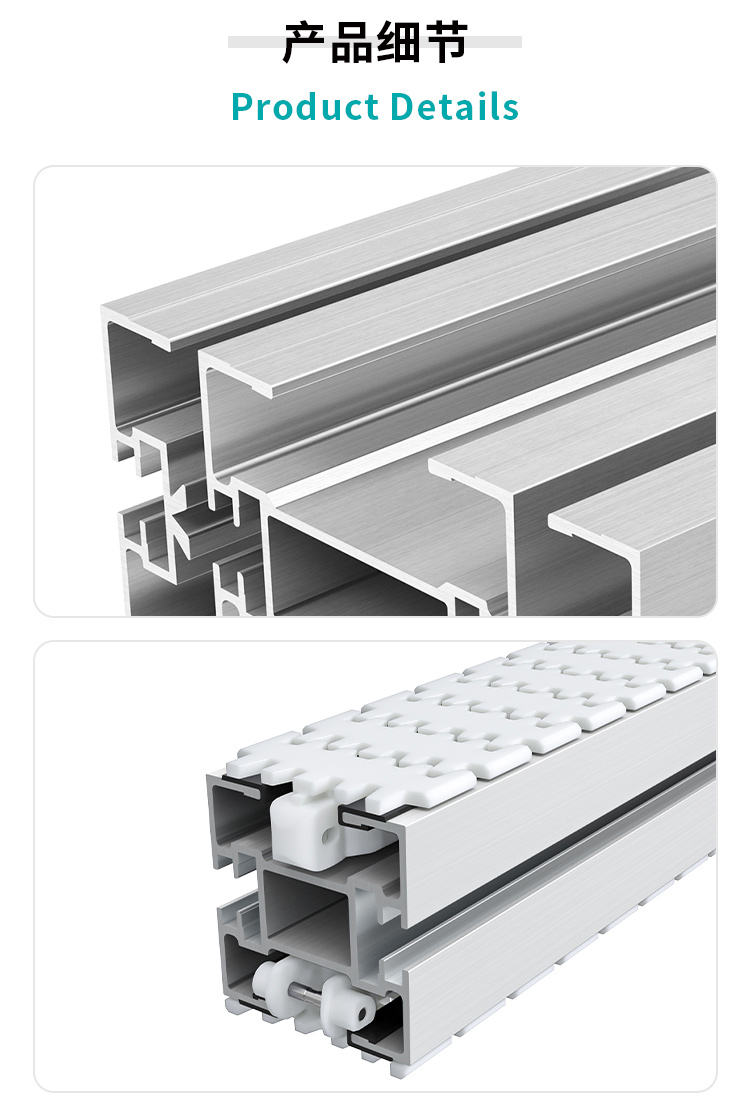
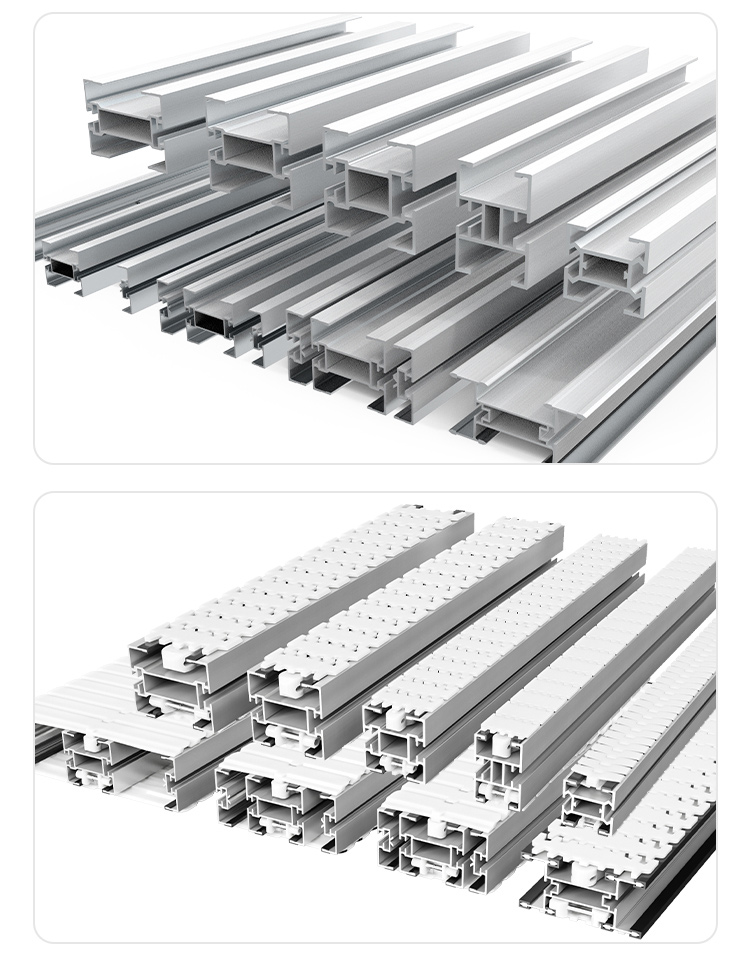
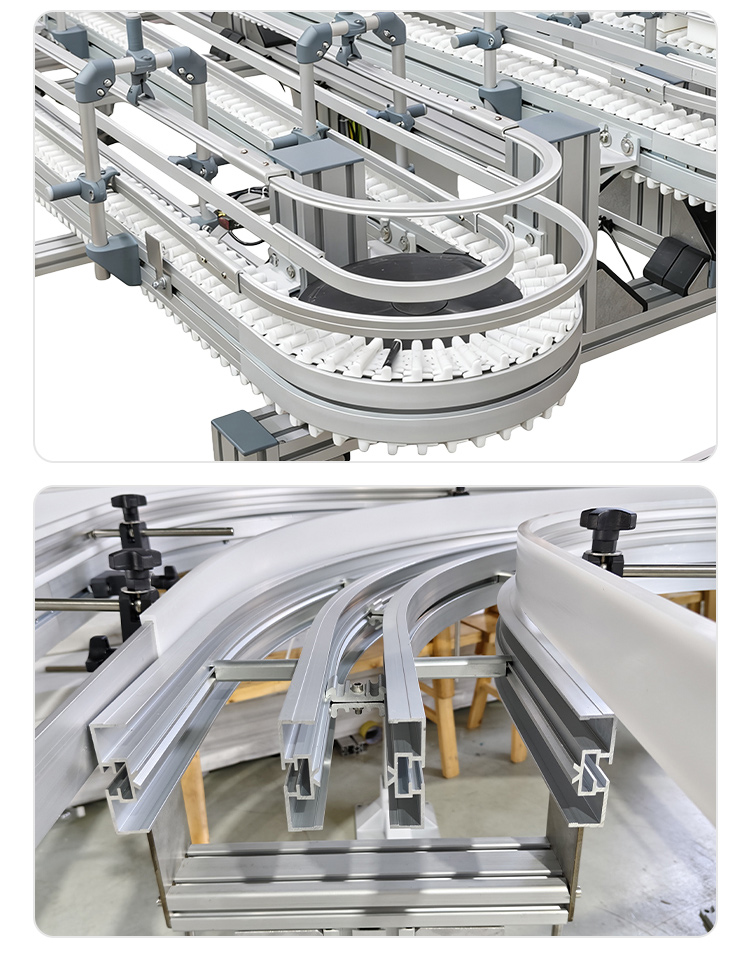
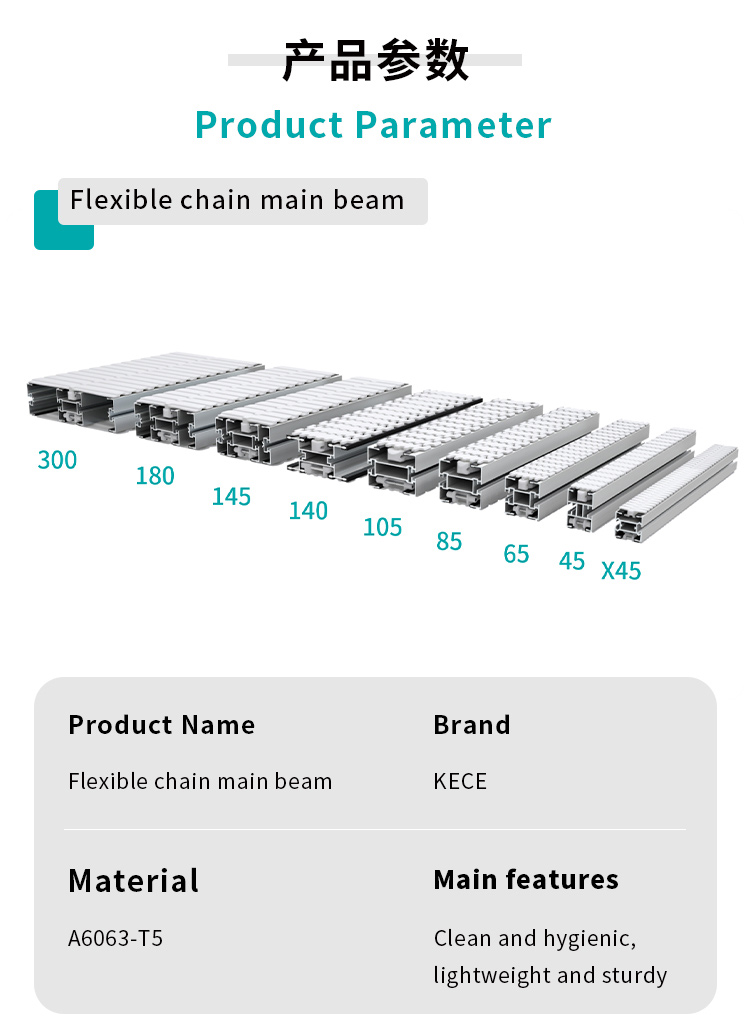
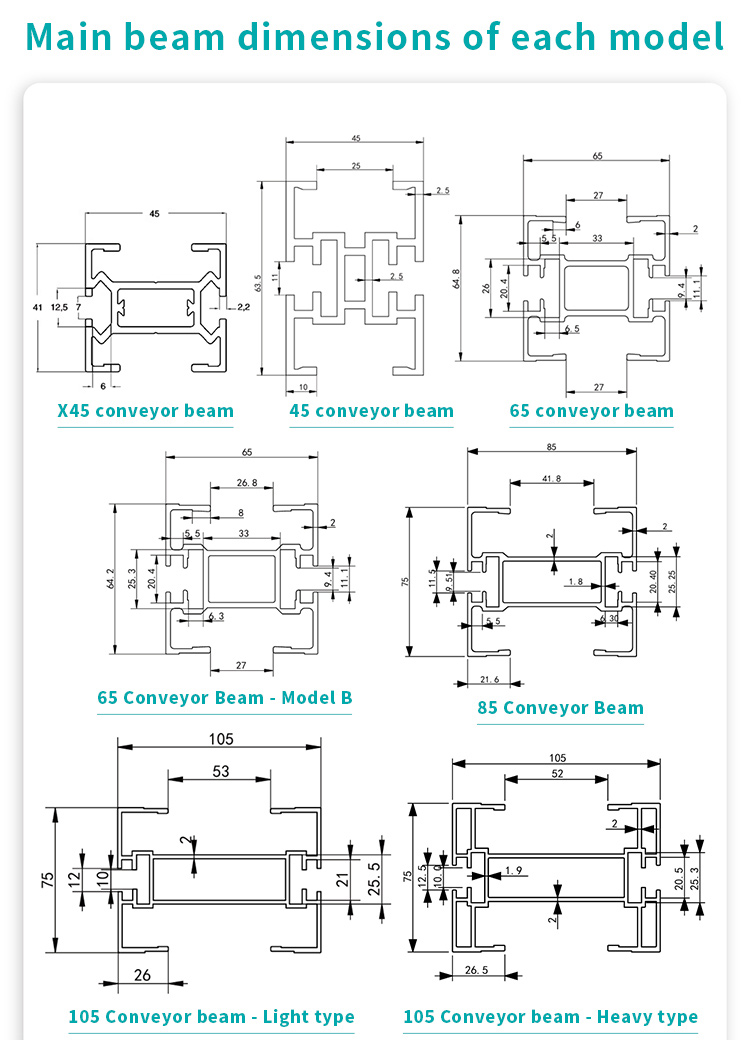
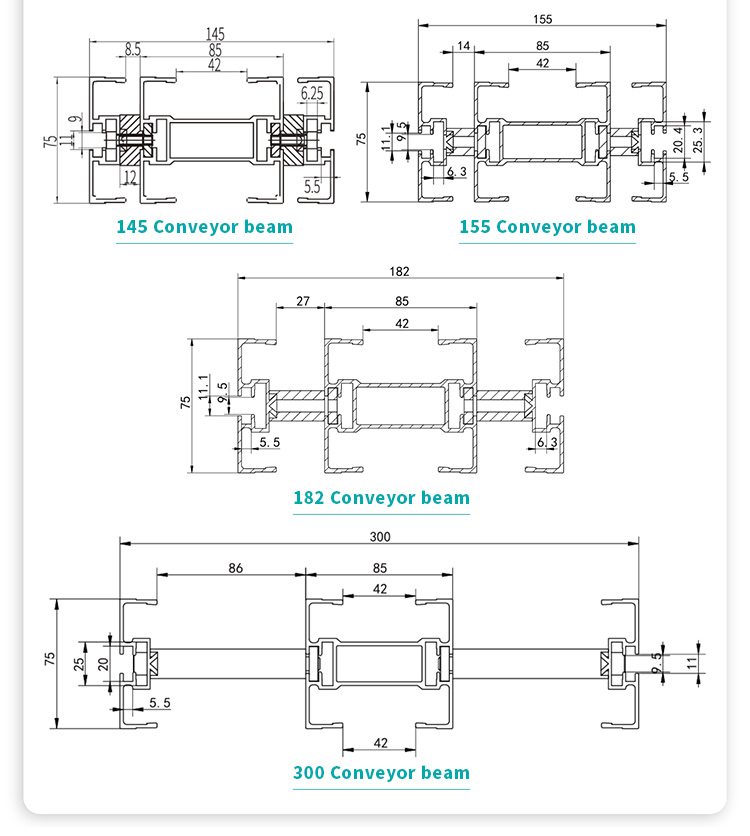
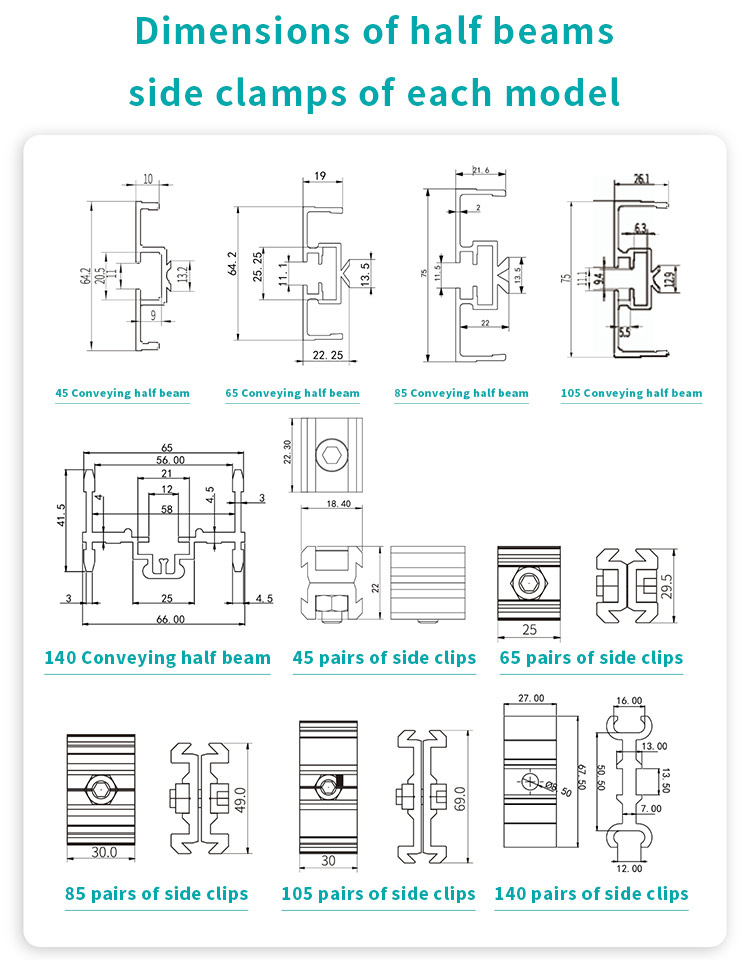
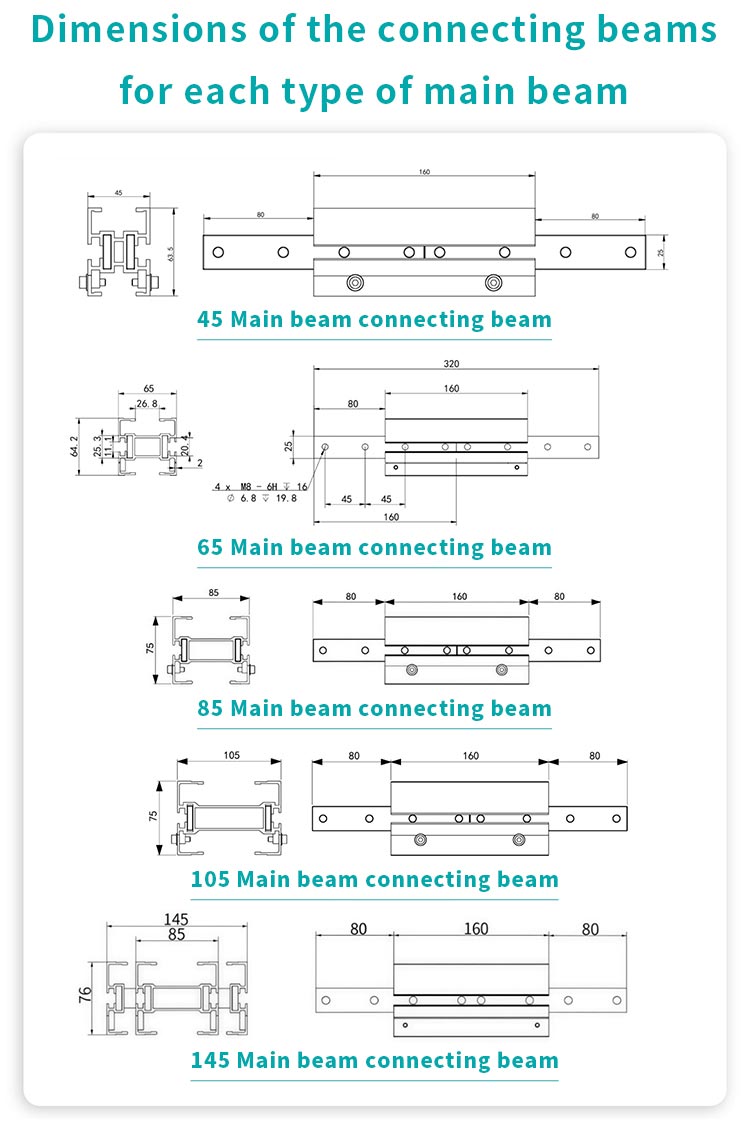
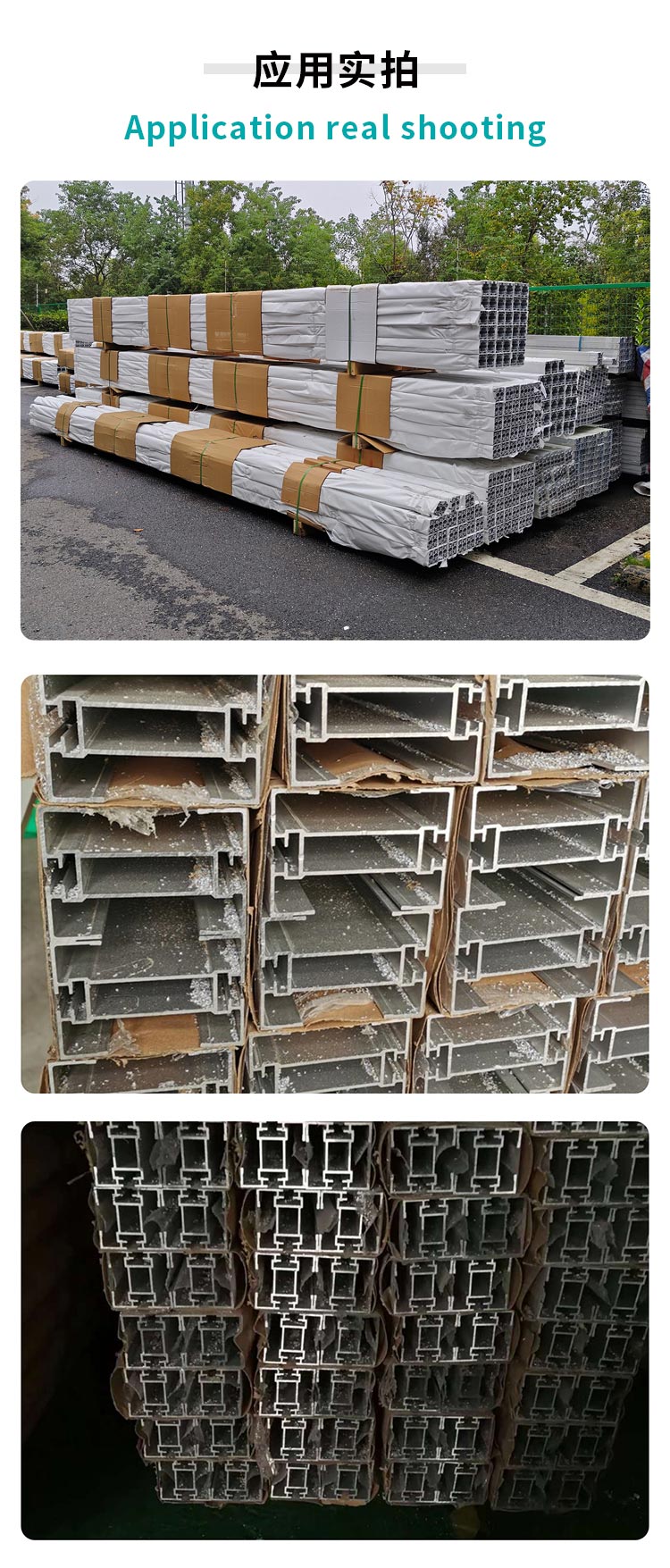
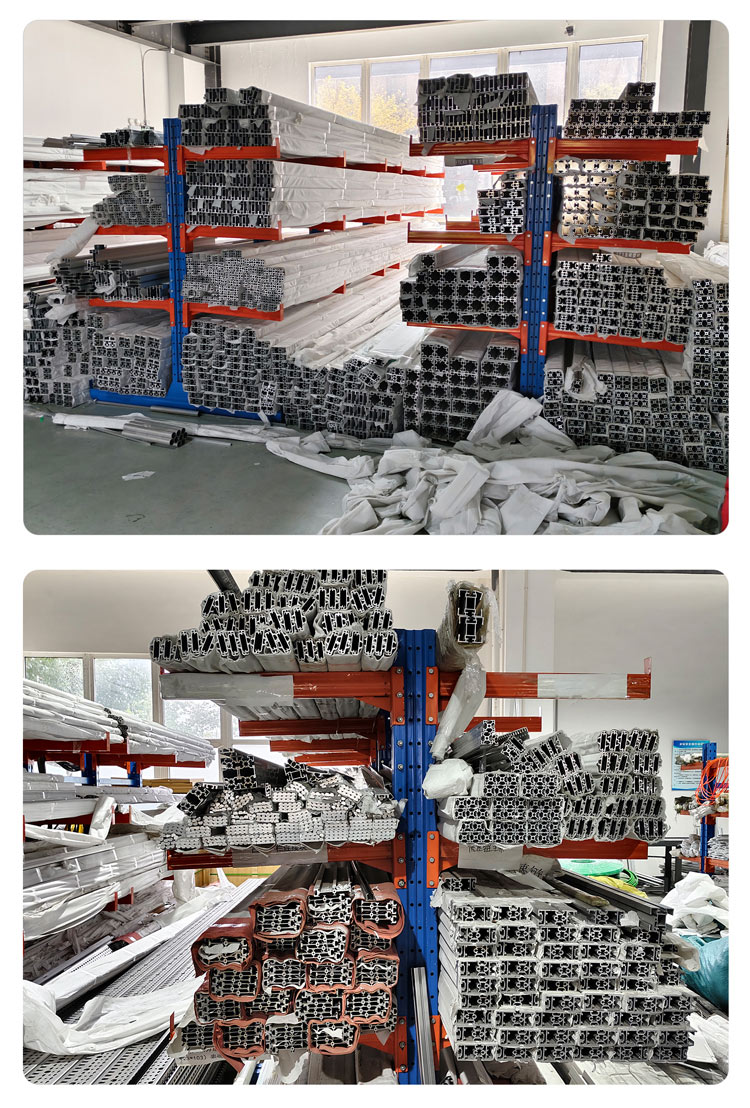
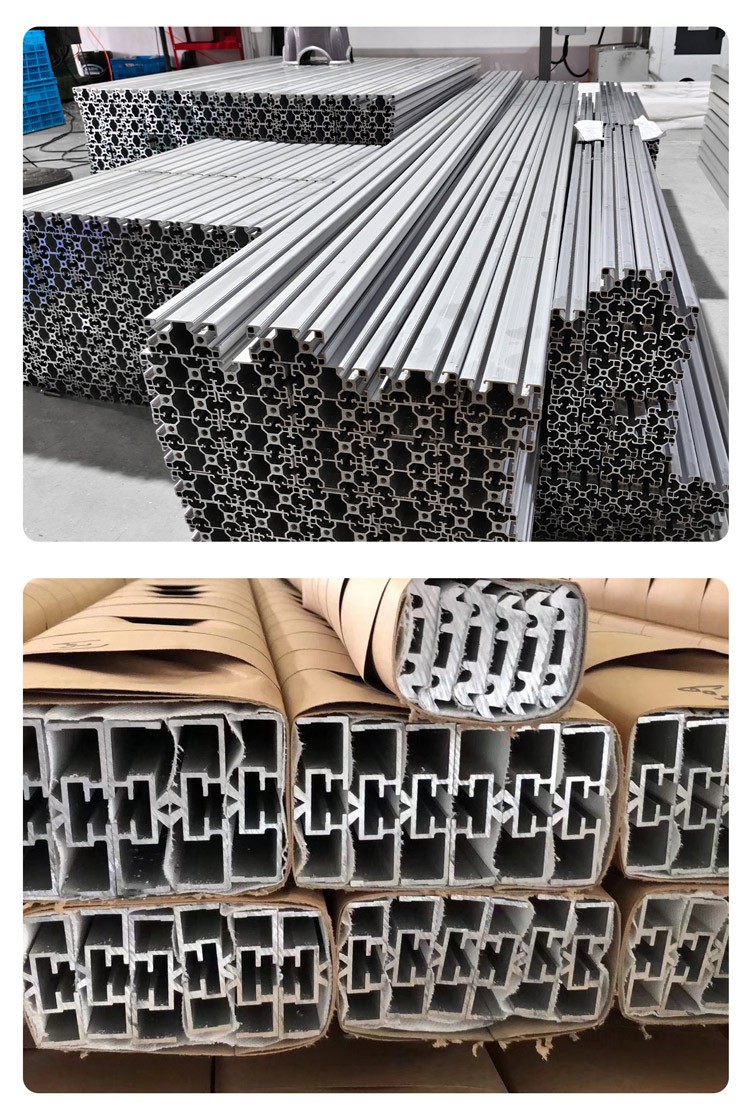
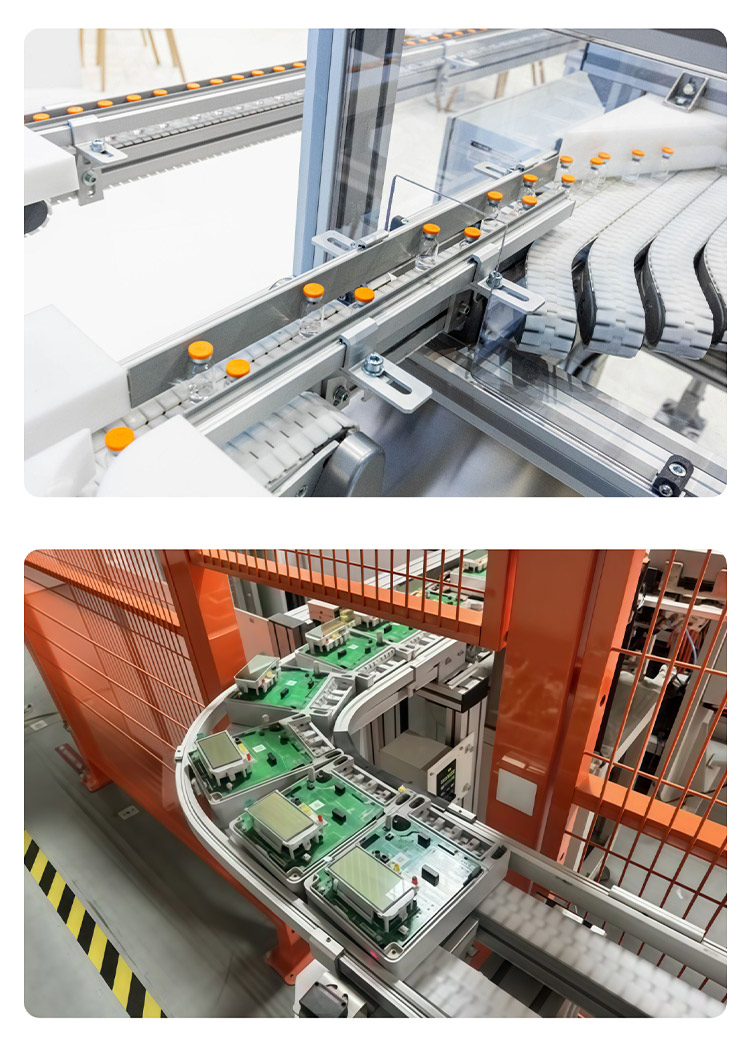
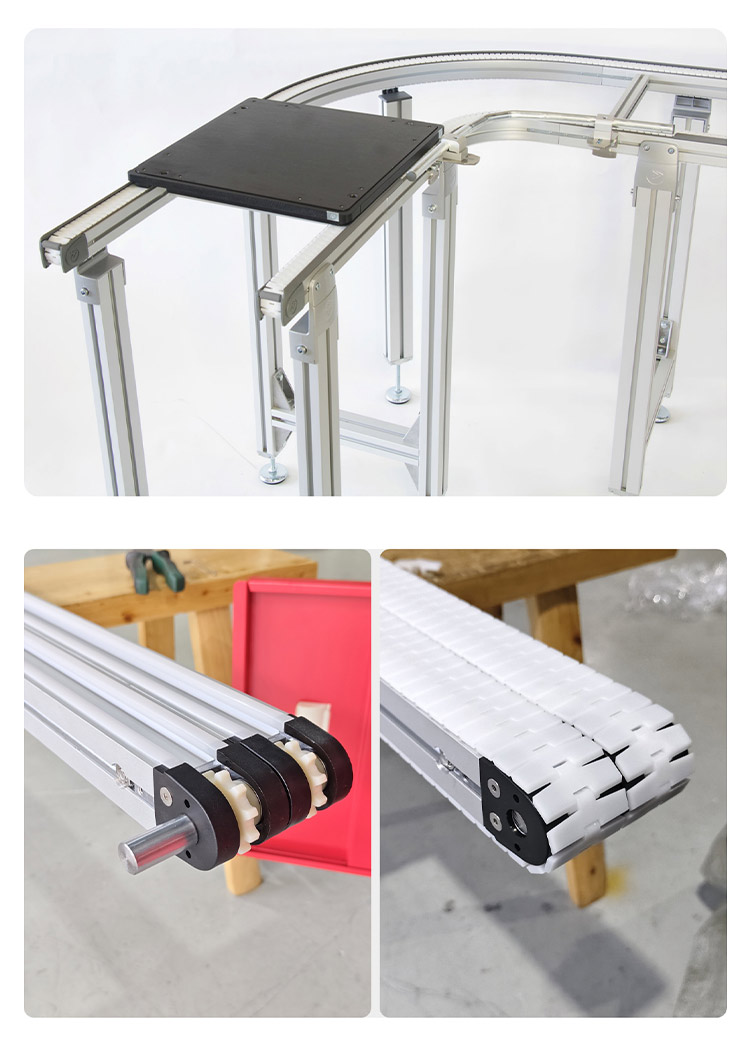
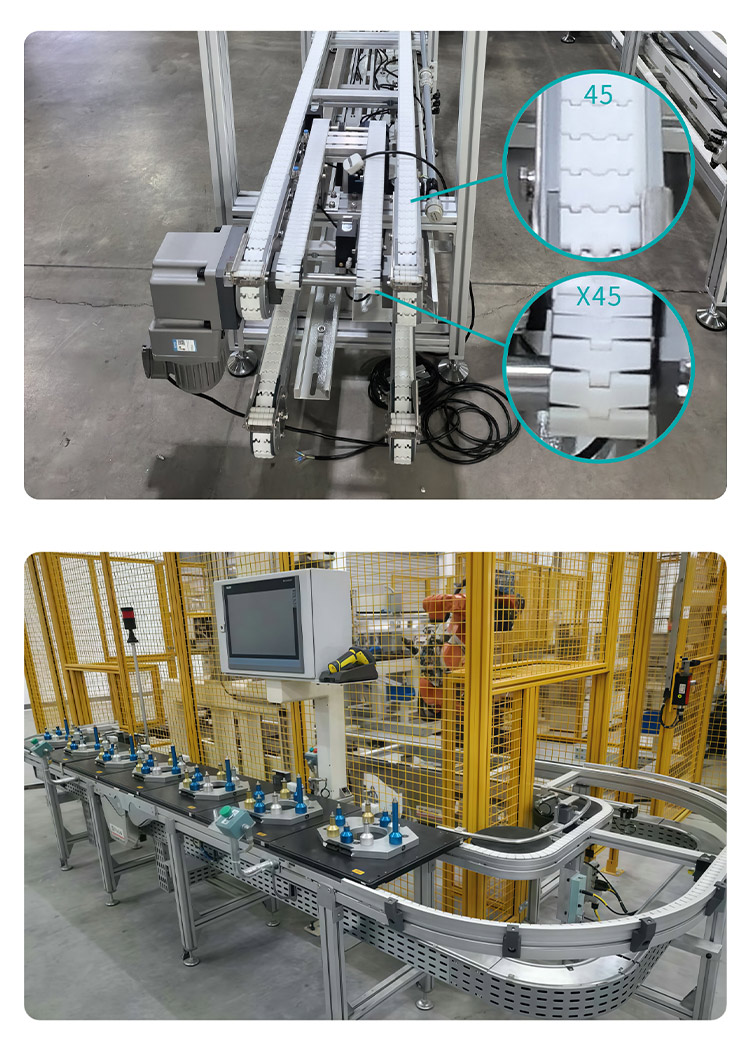
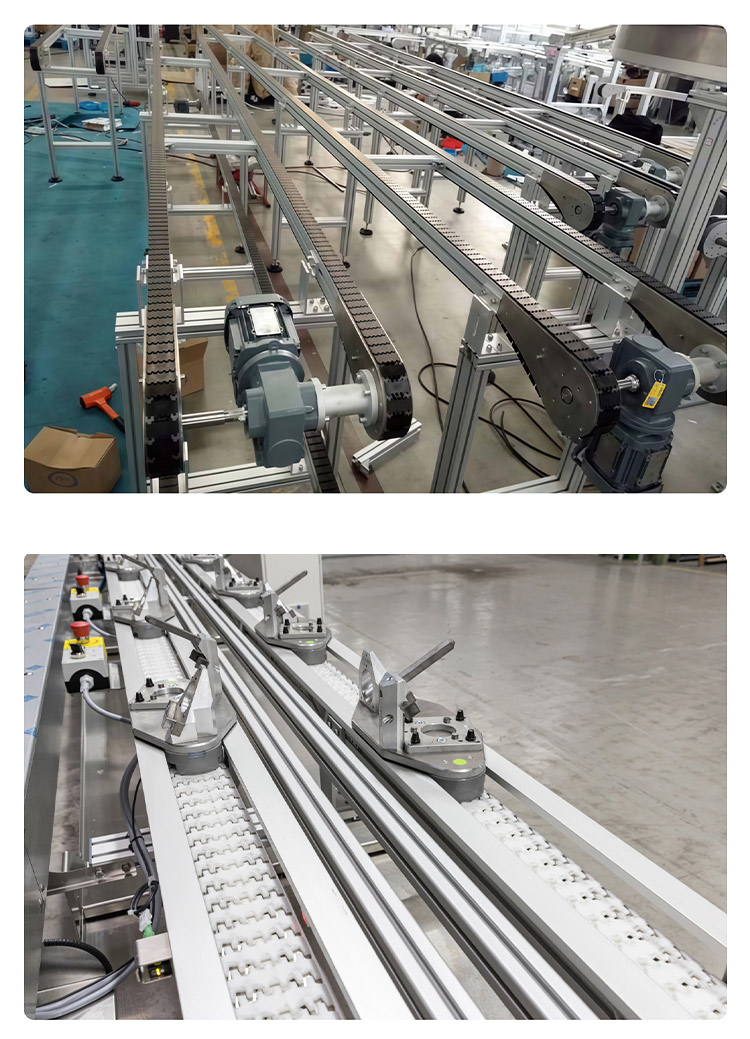
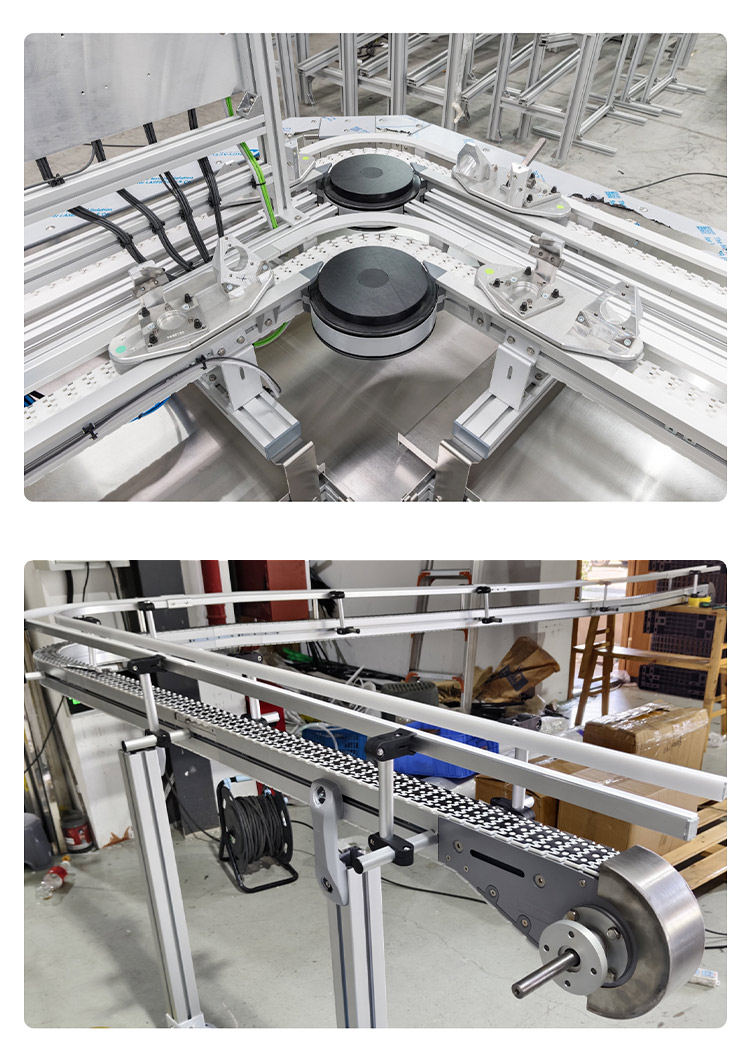
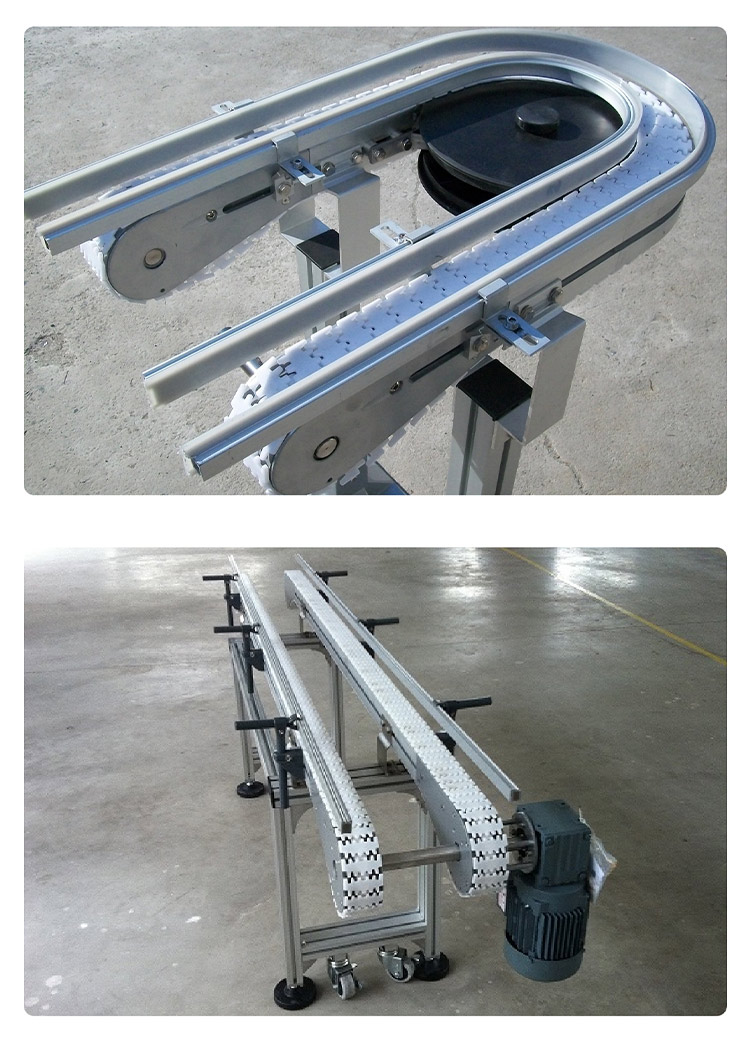
The flexible chain main beam serves as the primary load-bearing profile for flexible chain conveyor lines. It is manufactured through extrusion processing, with material options including 6063-T5 aluminum alloy and 304 stainless steel. The profile features a T-slotted design along its length, which accommodates mounting of guide rails, wear strips, chain tracks, and accessory brackets without additional drilling or welding operations.
Standard beam sections are supplied in lengths up to 6 meters. Connector kits are available for joining multiple sections to achieve longer conveyor runs. The aluminum version receives an anodized surface treatment, while the stainless steel version undergoes electropolishing. Both surface finishes provide corrosion resistance and support cleaning procedures common in production environments.
Parameter | Specification |
Material options | 6063-T5 aluminum alloy / 304 stainless steel |
Standard section length | Up to 6 m |
Profile design | T-slotted extrusion |
Surface treatment (aluminum) | Anodized |
Surface treatment (stainless steel) | Electropolished |
Connection method | Splice plates and dowel pins |
Compatible chain types | Flexible conveyor chain (45 series, X45 series) |
The T-slotted profile enables tool-free attachment of conveyor components including chain return rails, side guides, wear strips, and sensor mounting brackets. Sections can be cut to required lengths on site and joined using standard splice hardware. This design supports line reconfiguration and layout adjustments as production needs change.
The extruded aluminum profile provides structural rigidity with a weight approximately one-third that of equivalent steel profiles. The beam maintains chain alignment under dynamic loads and tension forces typical of flexible conveyor operation. Its rigidity reduces vibration and deflection during continuous conveying cycles.
Anodized aluminum surfaces resist moisture, mild acids, alkalis, and cleaning agents used in food and battery production facilities. Stainless steel versions are installed in environments with more aggressive cleaning chemicals or higher humidity levels. Smooth profile surfaces and rounded edges facilitate cleaning procedures.
Standard sections are manufactured in lengths up to 6 meters. Longer conveyor runs are achieved by joining multiple sections using dedicated connector kits.
Yes, the anodized aluminum version is compatible with food and beverage production settings where regular washdowns with mild cleaning agents are performed. For facilities using more aggressive chemicals, the stainless steel version is recommended.
The beam profile is designed to match standard flexible conveyor chain series including 45 and X45 specifications. Compatibility with specific chain models should be confirmed during the selection process.
Sections are connected using splice plates and dowel pins, which are supplied as part of the connector kit. The joining process does not require specialized tools and can be performed during on-site installation.
We are committed to providing customers with quality transpor-tation products and services, so that transportation more simple.